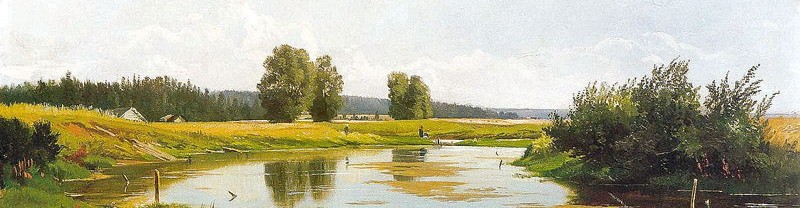
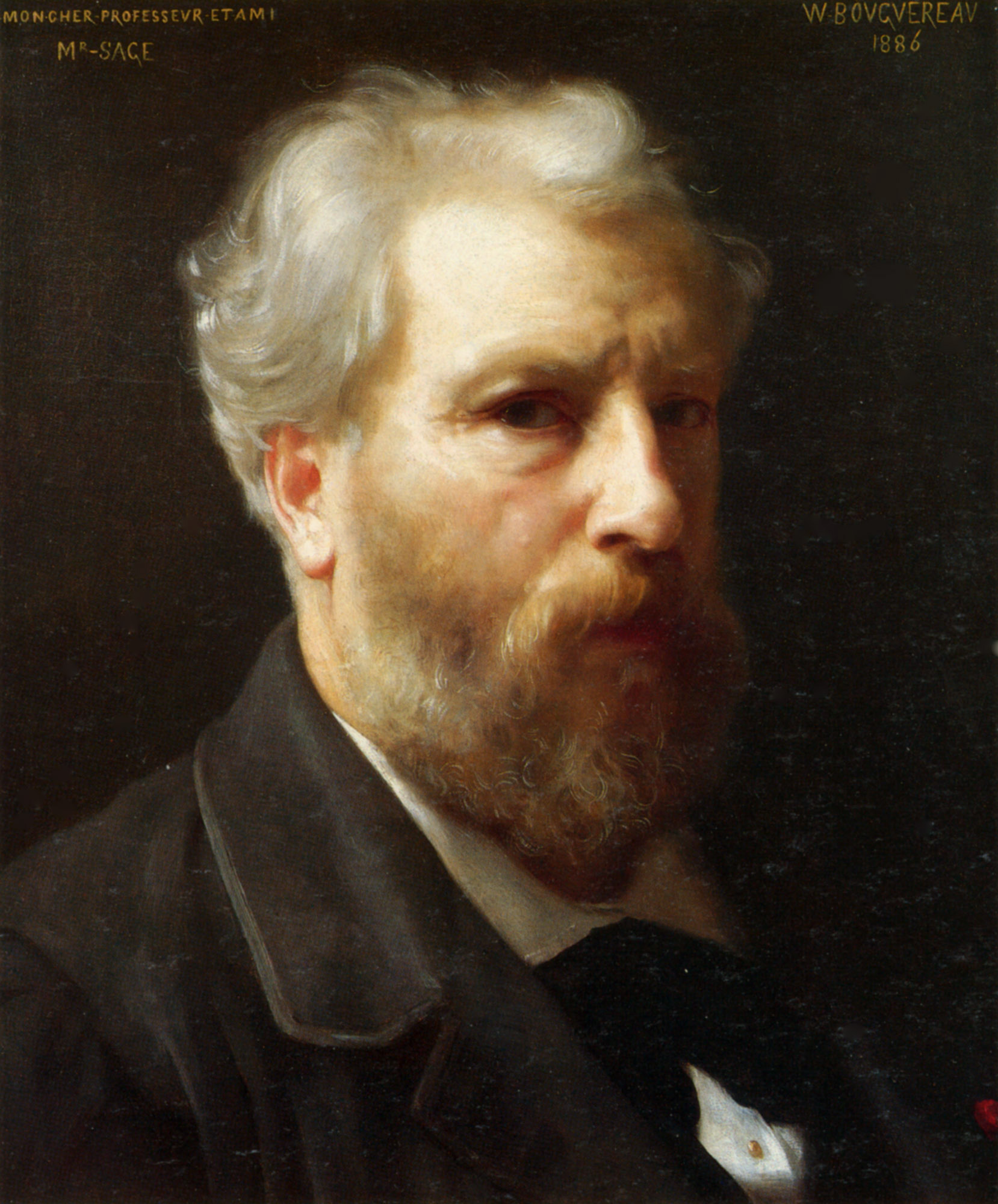
Bougureau is renowned for his classical themed academy art paintings. He devoted painstaken attention to details and mastered the human body in his many mythological and biblical nudes. He said once “There’s only one kind of painting. It is the painting that presents the eye with perfection”
In this guided tour I will discuss three painters who undertook major expeditions to reach countries and places far away. They risked their lifes on the way for the sake of art and their restless characters.
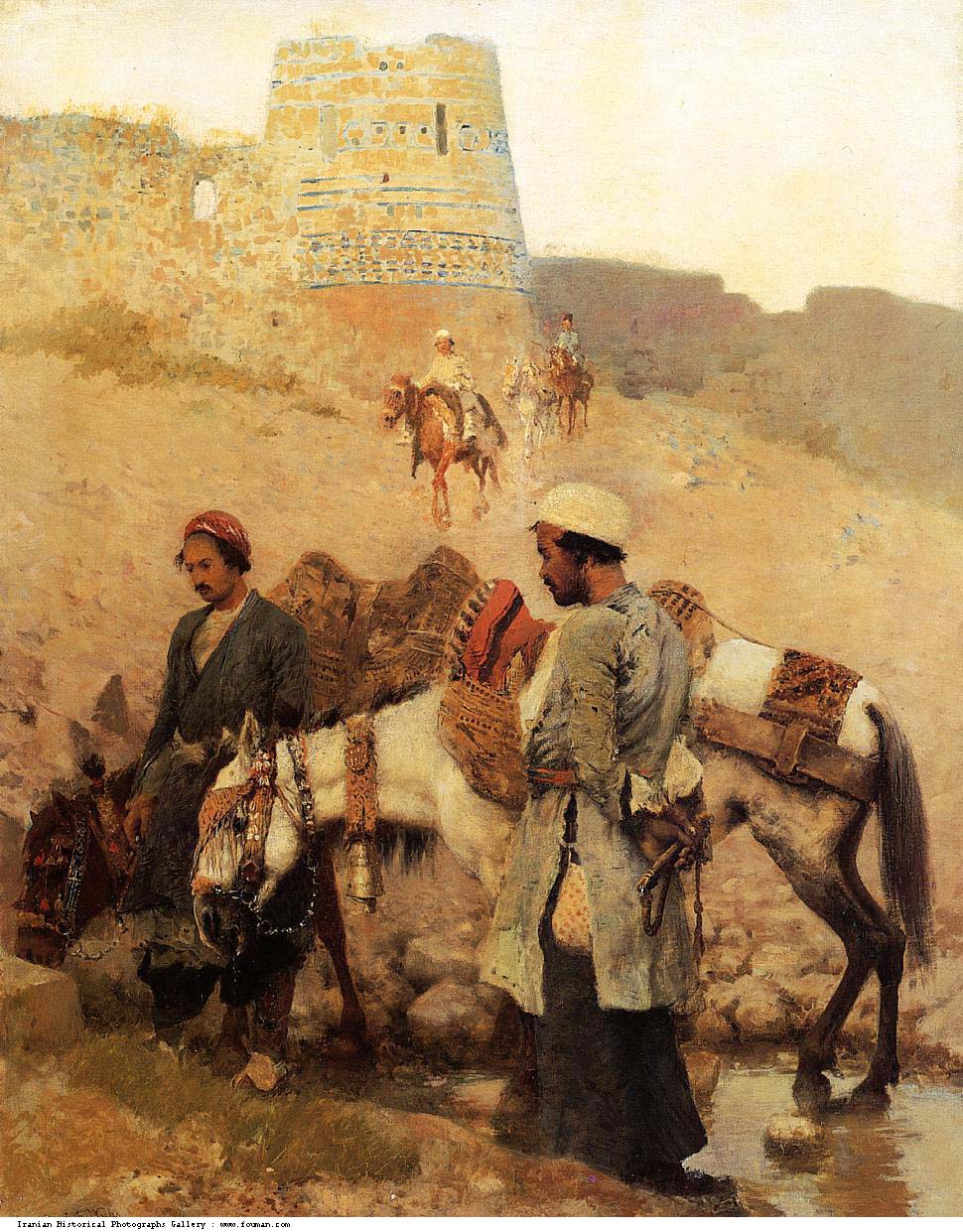
We will start with the American Edwin Lord Weeks who studied in Paris under Bonnet and Gerome and developed a very realistic style. After several visits to Morocco and Egypt which was not so unusual in that time, he decided to push further and to cross Persia to reach India. He did a lot of travel on horseback.
Edwin Lord Weeks, Traveling in Persia, 1895
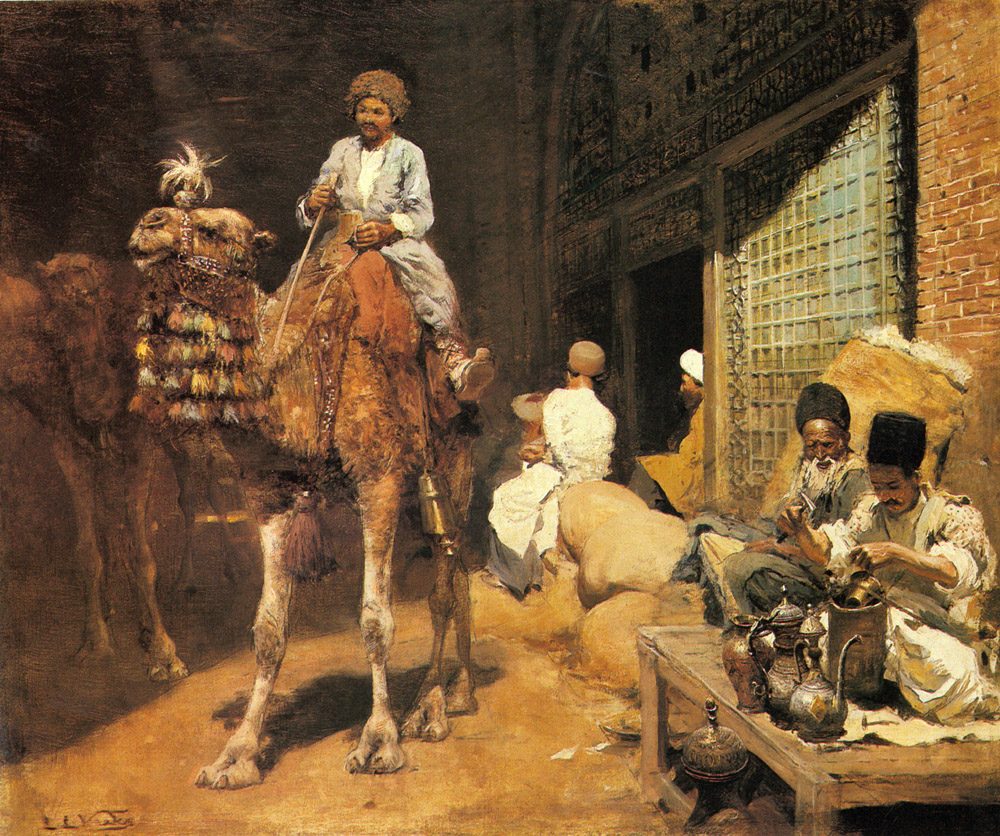
Edwin Lord Weeks, a marketplace in ispahan, 1885
The journey was hard and Weeks had to change his route due to civil war in Afghanistan and a cholera epidemic in Russia. Even though this precautions they were confronted with another cholera epidemic in Persia and sadly his travelmate died later on the trip due to typhus. After reaching the Persian gulf, he took a steamboat for the last part to India.
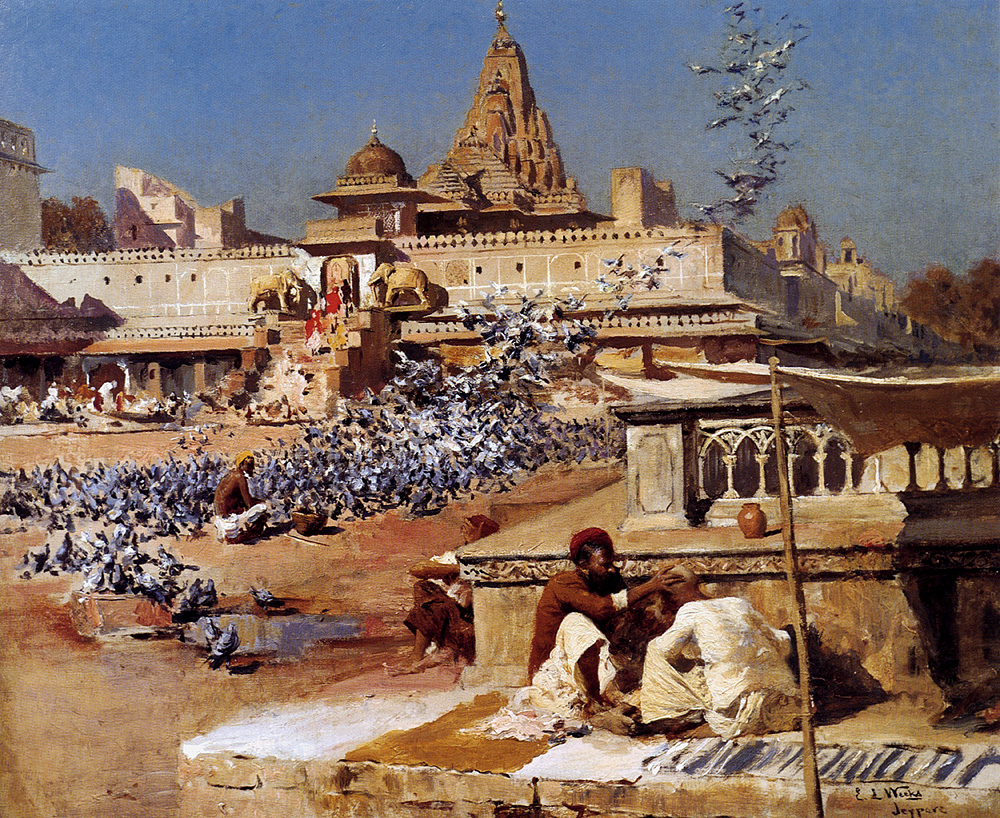
Edwin Lord Weeks, feeding the sacred pigeons jaipur
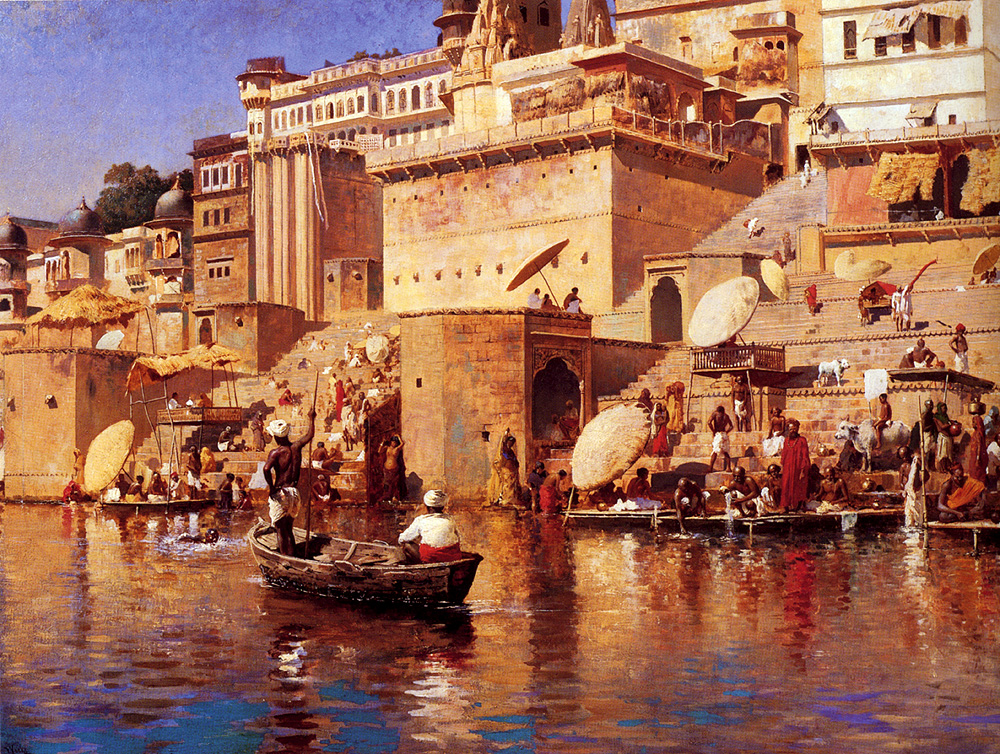
Weeks made impressive paintings of colonial India in which the rich colours of the Indian people and the landscape were translated on his canvas. He made use of photography for architectural details so he could really make an almost photorealistic impression.
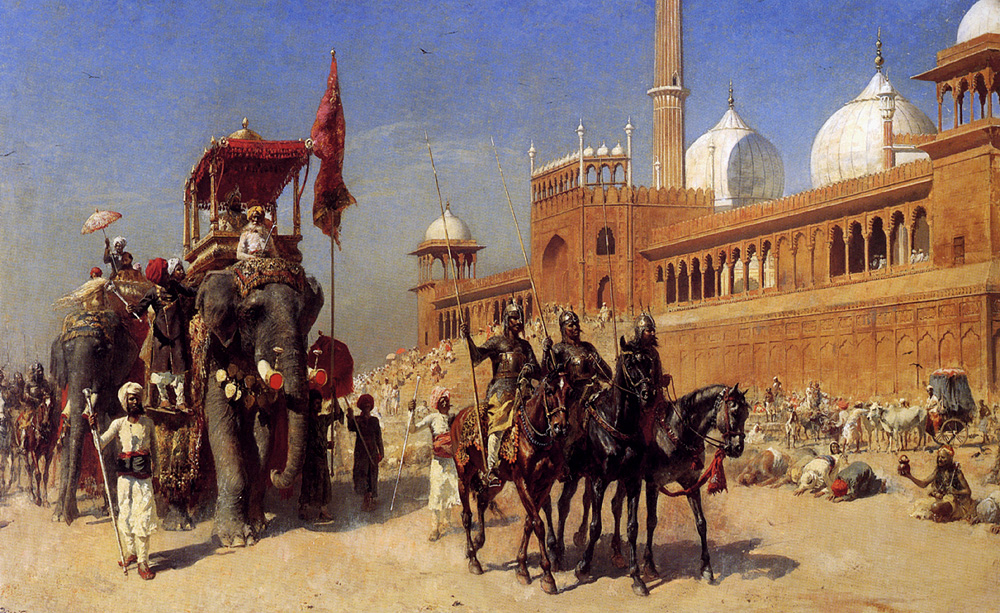
Edwin Lord Weeks, great mogul and his court returning from the great mosque at delhi india, 1886
Edwin Lord Weeks, on the river Benares
Although the Moghul empire was replaced by the British Raj, their splendid decorated palaces and royal elephants were still in use and made a visual feast for the eye. At the end of his career back in the USA, Weeks made a series of paintings based on the famous 1001 nights stories.
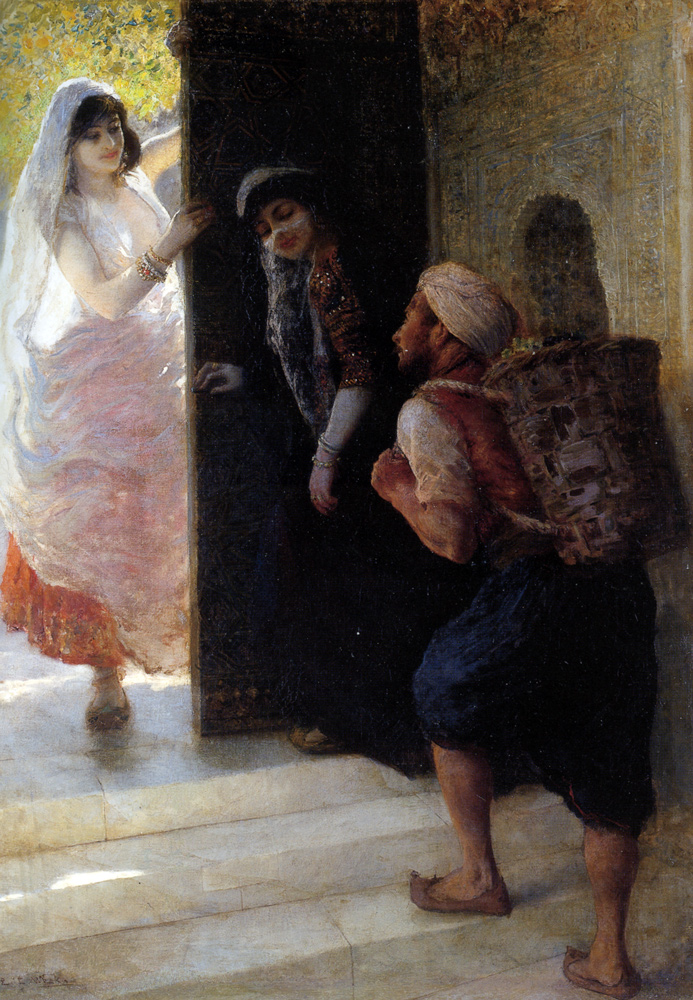
Edwin Lord Weeks, 1001 nights the porter of Bagdad, 1900
In this story of 1001 nights, a poor porter is summoned by a rich lady to accompy her on an extensive shopping tour through Bagdad to end with a full basket of all kinds of luxury goodies at the entrance to a beautiful forecourt with two other beautiful ladies. A kind of heaven on earth.
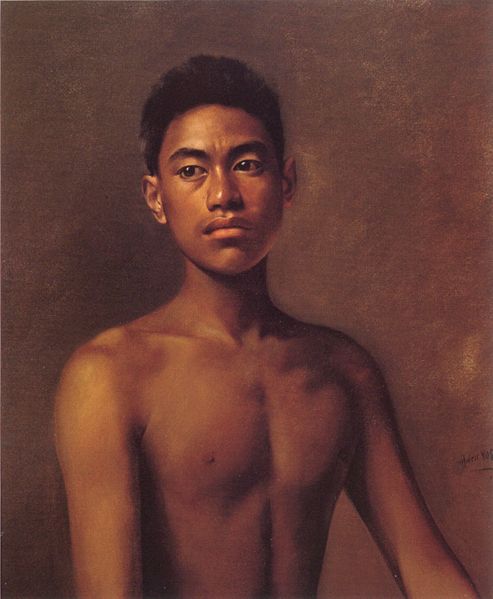
The next artist is the Dutch Hubert Vos. He started his career in Europe but on a fair in Chigaco, he fell for a charming lady who appeared to be the last princess of Hawai. This resulted in further travel to Korea and Hawai. Vos specialized in portraying non-caucasian people and therefore loved to travel and meet people.
Hubert Vos, Hawaiian fisher boy, 1898
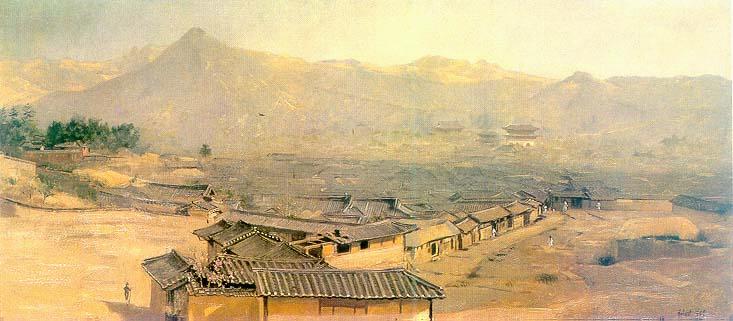
On his trips to south east Asia Vos also visited Korea and made no only portraits but also paintings of the scenery.
Hubert Vos, Seoul scenery, 1899
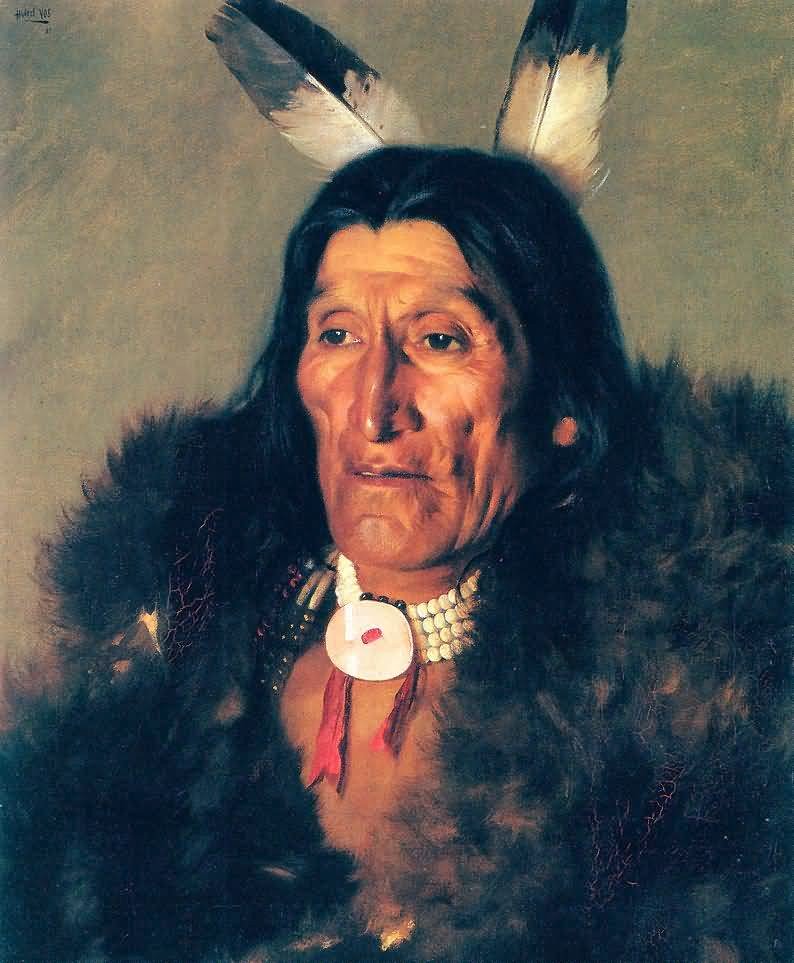
For characteristic faces, Vos had not to travel so far. Also in the USA he portrayed the original inhabitants for example this impressive Sioux chief.
Hubert Vos, Sioux chief in buffalo robes
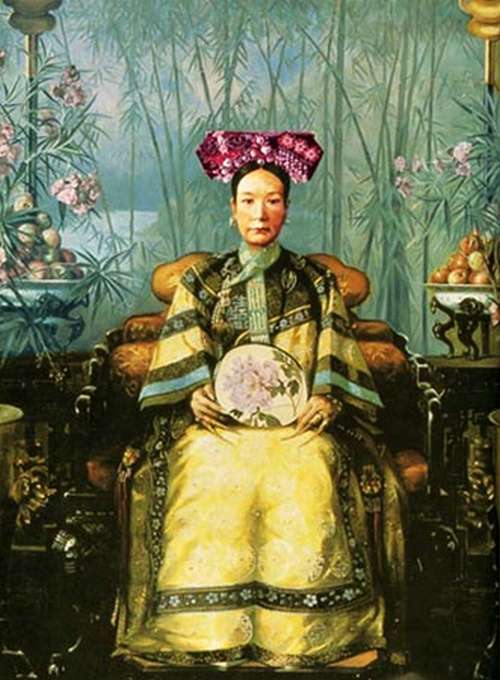
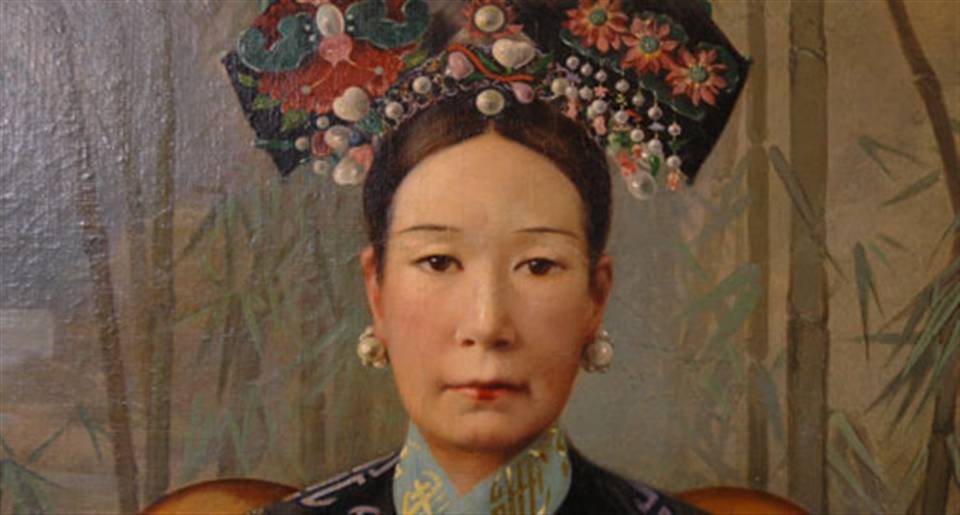
But by far his greatest adventure was an invitation from the Chinese government to portray some important mandarins. On arrival he was told the true reason : the empress of the enormous Chinese empire wanted to be portrayed by Vos. As Vos did his job he had to overcome some cultural difficulties. He was not supposed to talk to the empress and after two sessions the empress made clear that his painting was too realistic, she wanted Vos to paint her as if she was much younger. This resulted in the following offical portrait of the dowager empress cixi which still can be seen in the summer palace in Bejing.
Hubert Vos, Dowager Empress Cixi, 1905
Detail of the 1905 painting
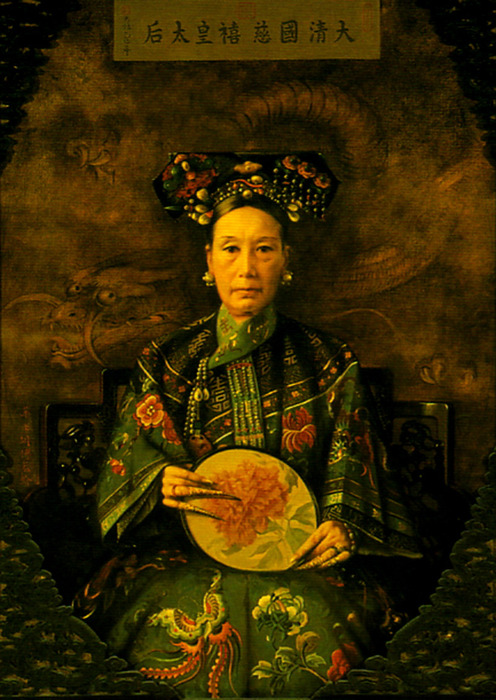
Another portrait which he made a year later is more realistic and shows an old empress on her throne, the last imperial representant of a centuries old civilisation.
Hubert Vos, Dowager Empress Cixi, 1906
The last traveller artist will be discussed in a separate part II.
Nudity is a subject which always attracts the attention of the public. In the 19th century artists dared to shift the subject from classical nudes such as Greek and Roman figures, to contemporary naked bodies. To accomodate moral objections, this was often done in the context of exotic orientalist themes.
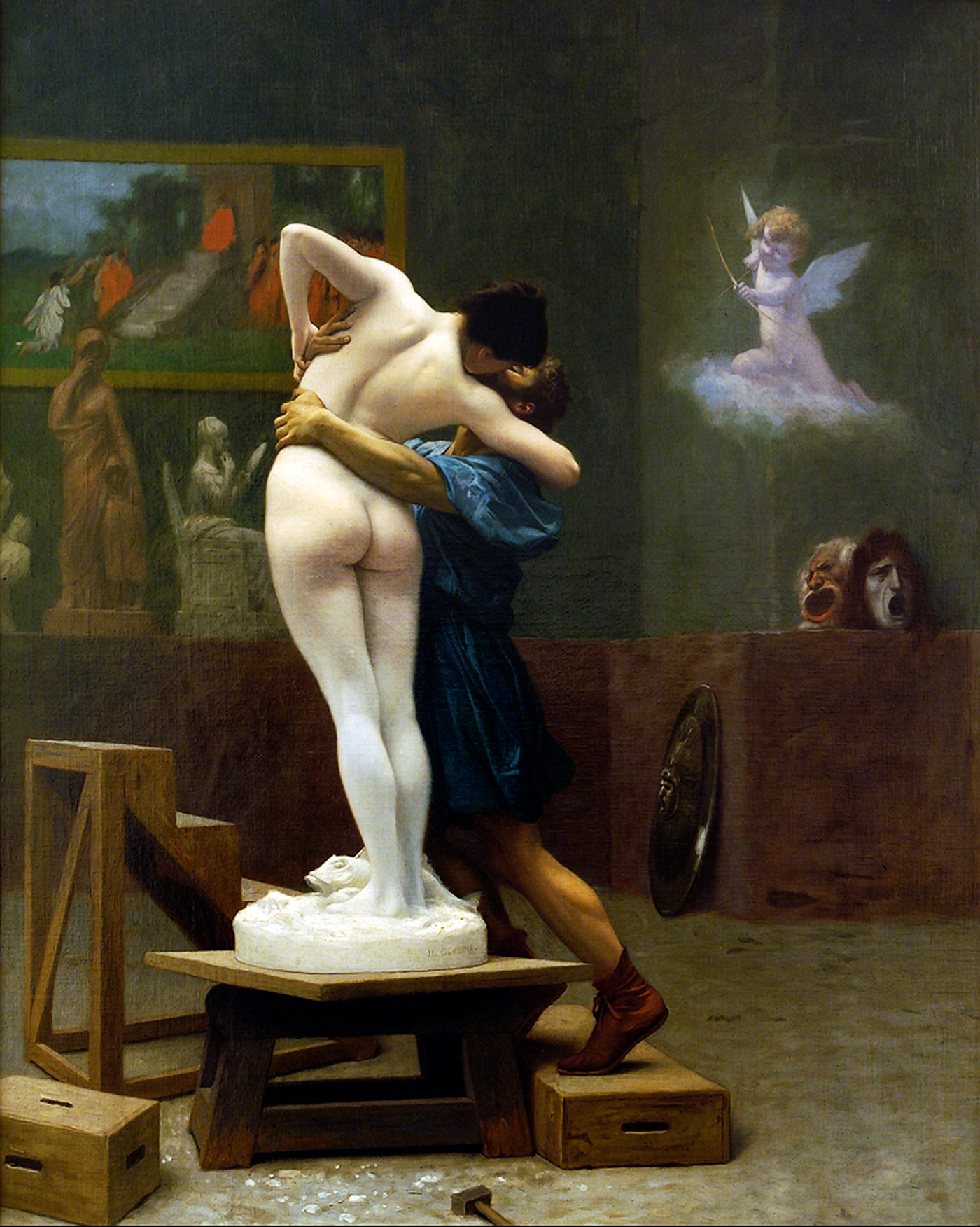
A perfect example of this conversion from classical nudity to more realistic nakedness is this painting of Gerome.
Jean-Leon Gerome, Pygmalion and Galatea, 1890
Gerome brings a Greek classical scene to life in which the sculptor-prince Pygmalion kisses his masterpiece Galatea. Aphrodite intervenes and the marble statue transforms in a real human body of flesh and blood.
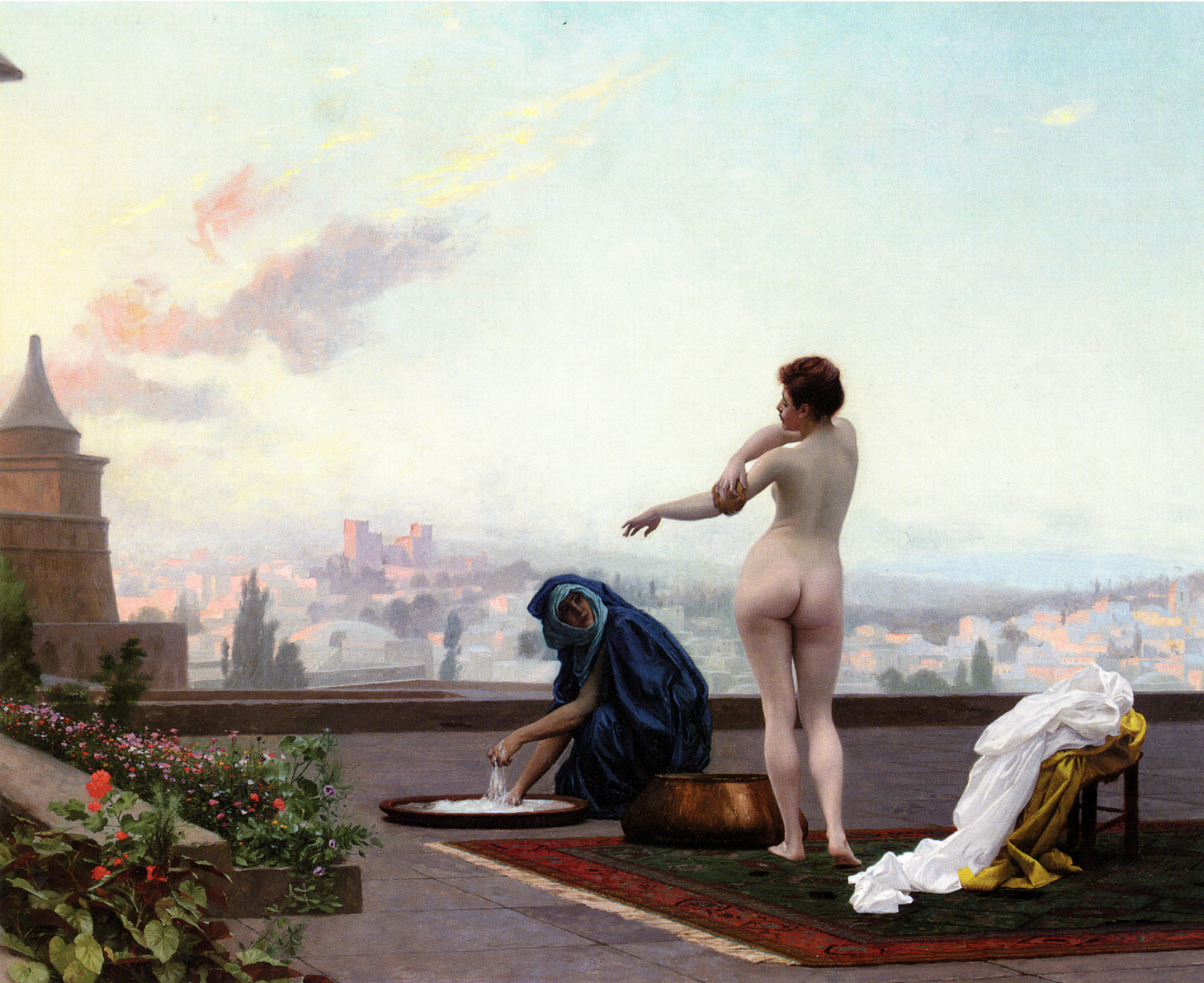
Gerome was a master of 19th century art and had great skills with a huge diversity in subjects. Another example of nudity is the biblical scene of Batseba in which the wife of a soldier bathes on the roof of her house and her naked body is spotted by king David from his nearby palace.
Jean-Leon Gerome, Bethsabée, 1889
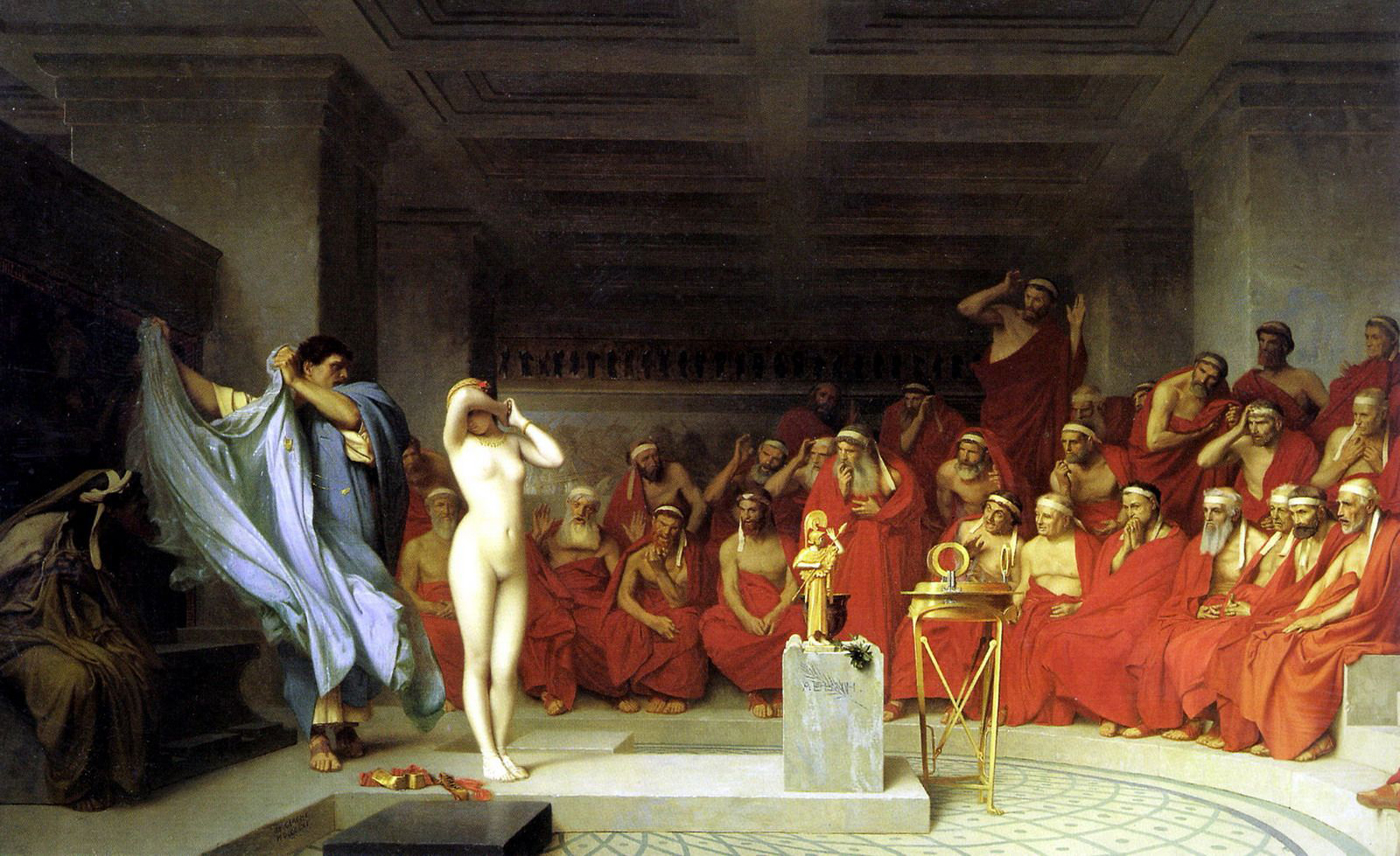
The following example is the story of Phryne.This Greek courtisane who lived in Athens 350 BC, provoked her fellow citizens by several ways. She posed for several statues in temples and offered to finance the rebuilding of the walls of Thebes on the condition that an inscription was made “Destroyed by Alexander (the great), restored by Phryne the Courtisane”. Also she undressed in religious festivals to show her beauty. A trial was started and despite the best lawyers, the verdict tended to become a death penalty. In utter despair her lawyer unrobed Phryne and showed her to the jury. The jury was shocked by her beauty and decided that such a perfect God given body must be spared.
Jean-Léon Gérôme, Phryne before the Areopagus, c. 1861
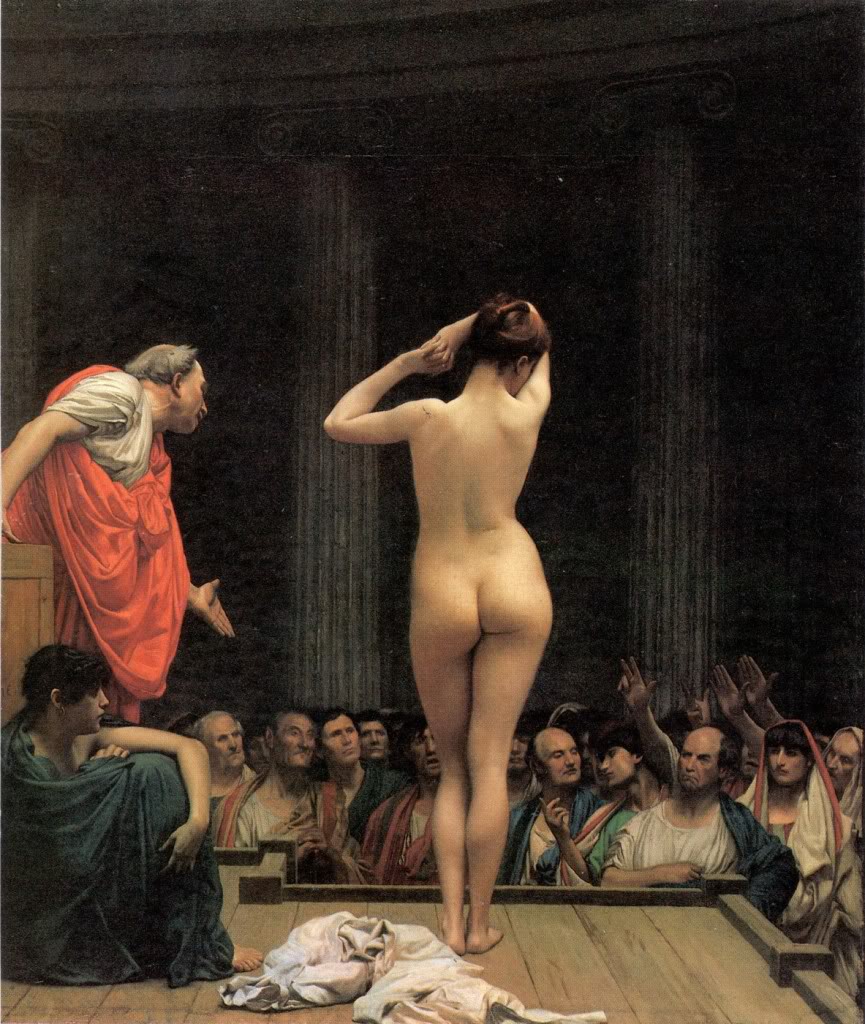
Another Gerome example of coping with nudity is the painting of the slave market in ancient Roman times. The human body is reduced to merchandise and the highest bidder is the owner. Besides the woman who hides her face in shame, an important subject in the painting are the faces of the roman people. There is a mix of greed and lust.
Jean Leon Gerome, Slave market in Rome, 1884
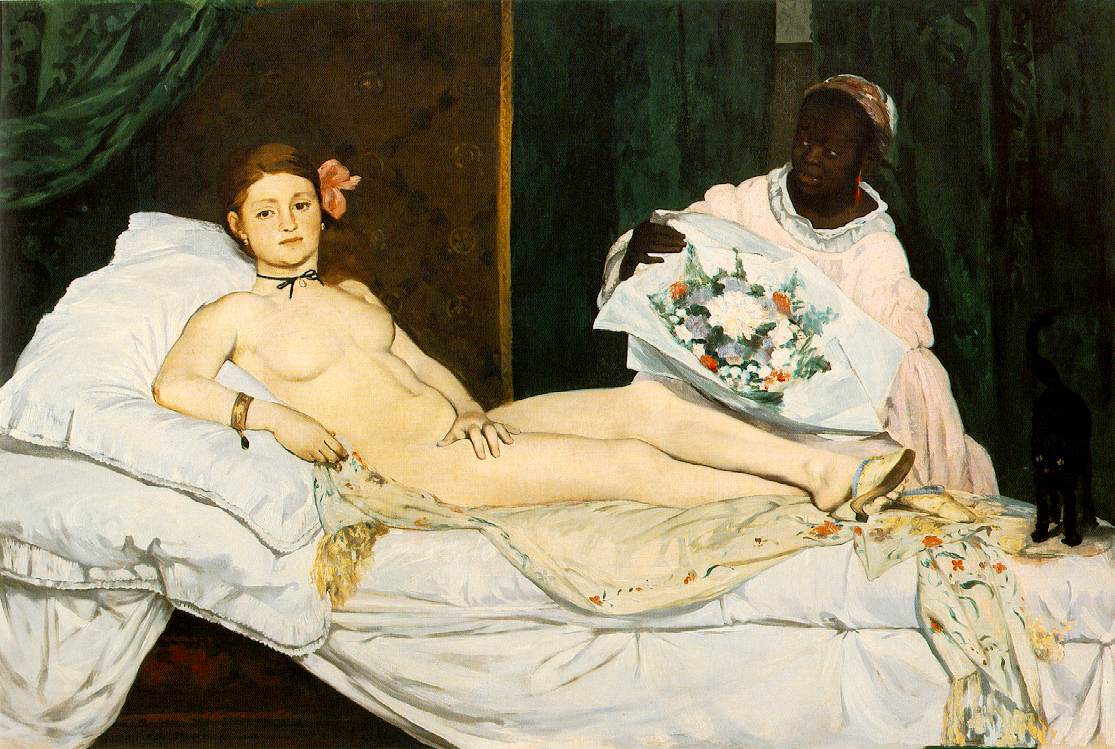
In an overview about nudity, Edouard Manet cannot be neglected. His painting Olympia shocked the audience at the salon, in depicting a naked prostitute who received flowers (probably from one of her customers). Although Manet didn’t dare to depict pubic hair, he made a reference to it by painting the black, hairy cat at the feet of the woman.
Edouard Manet, Olympia, 1863
Courbet did not have much reserves about pubic hair and made an even more provocative painting called “the Origin of the world” in which the genitals of a naked woman were exposed with legs spread. Even today this painting is much debated and sometimes forbidden due to its pornographic nature.
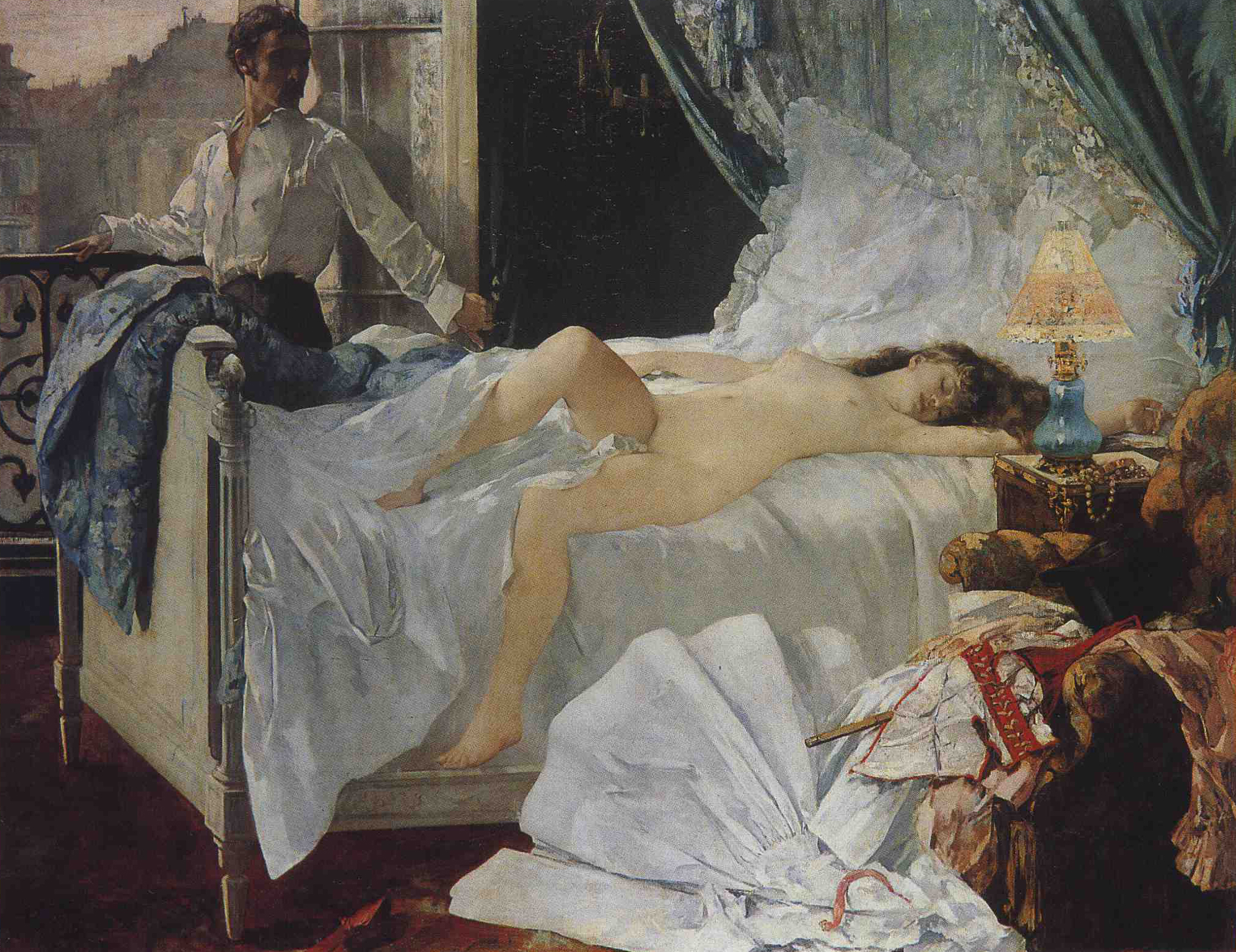
Another painting that was too provocative for the jury of the French Salon was the story of playboy Rolla and callgirl Marion, in which the melancholic Rolla is facing bankruptcy and is on the brink of commiting suicide.
Henri Gervex, Rolla, 1878
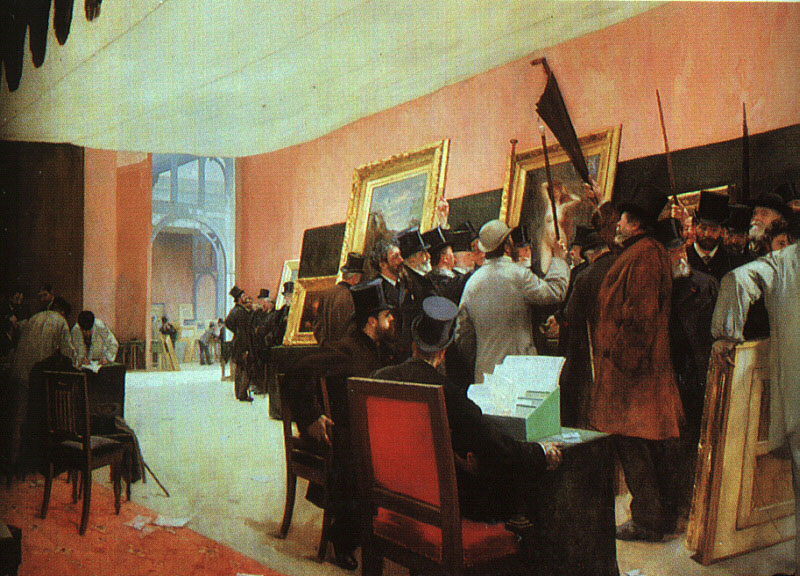
Because of the rejection by the jury, Gervex exposed the painting in a window of a furniture shop and attracted almost all Paris over a period of three months. The painting therefore boosted his career. We can assume he had pleasure in painting a later work concerning the jury of the Salon performing their work in front of another nude painting.
Henri Gervex, a session of the painting jury, 1885
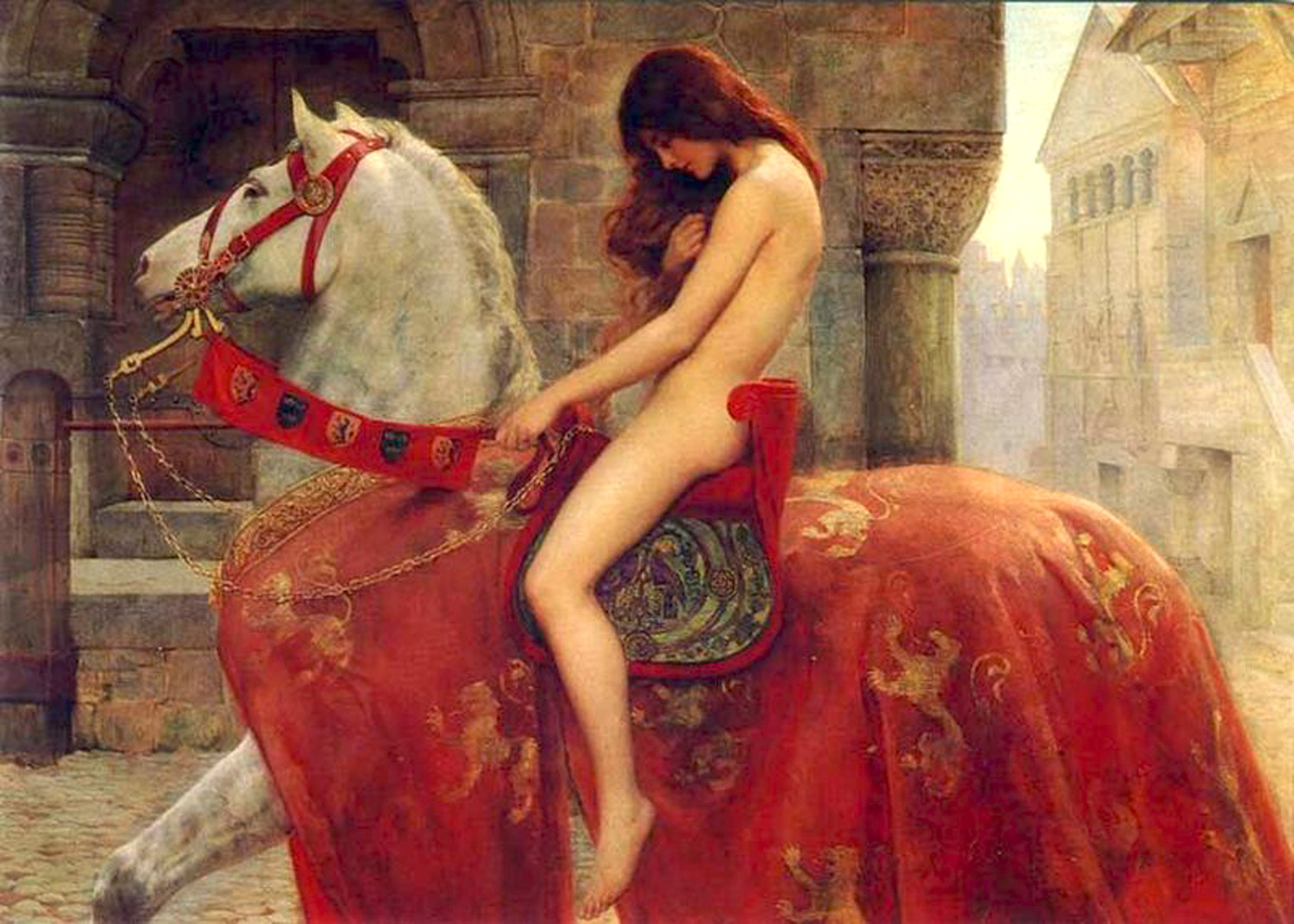
A more modest approach to nudity comes from Collier. He made a painting of lady Godiva who, according to legend, lived in the early middle ages in Coventry, England. Her husband was wealthy and harsh and imposed oppresive taxes to his tenants. As lady Godiva asked for less harsh taxes, her husband told her that he would only do that after she would ride naked through the streets. The lady astonished friend and foe by really executing her assignment, but her naked ride was performed only after an official proclamation that everyone had to stay indoors and had to close the windows. One person, a tailor called Tom, could not resist the gaze, and made a hole in his shutters to watch the naked lady ride. He was struck blind and would forever live as the famous Peeping Tom.
John Collier, Lady Godiva, 1897
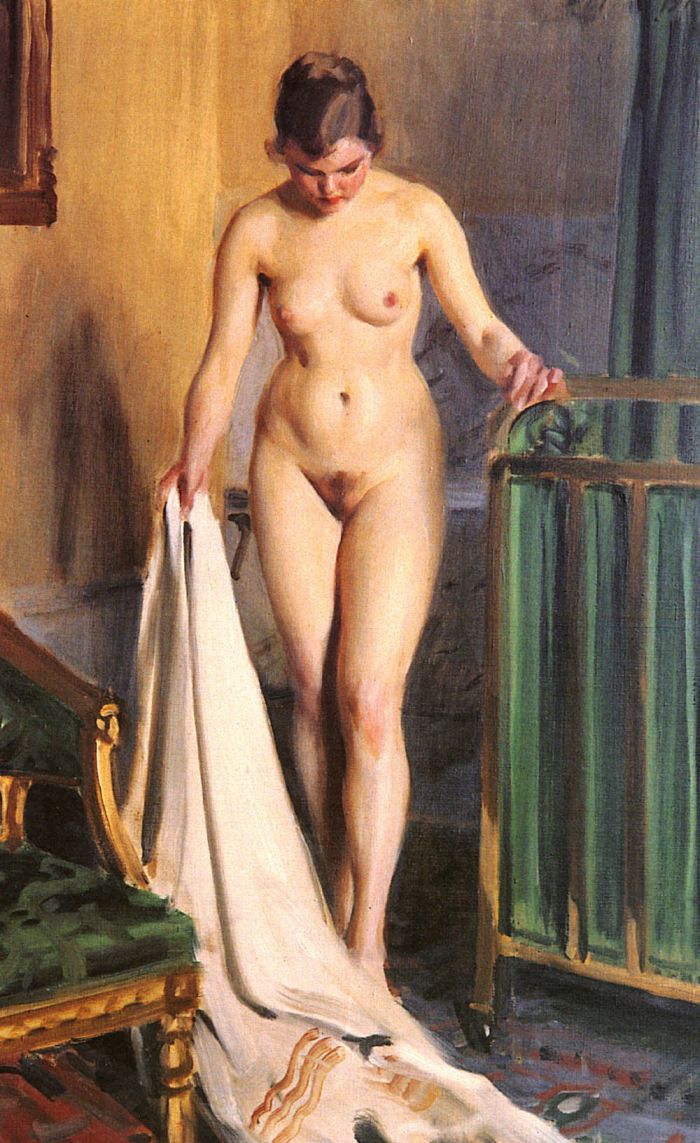
Although a lot of painters did nude painting, I think the Swedish Anders Zorn must be named here. He was a famous painter is his time who did portraits of kings and presidents, but also did a lot of nudes.
Anders Zorn, i-sangkammaren (the bedchamber), 1918
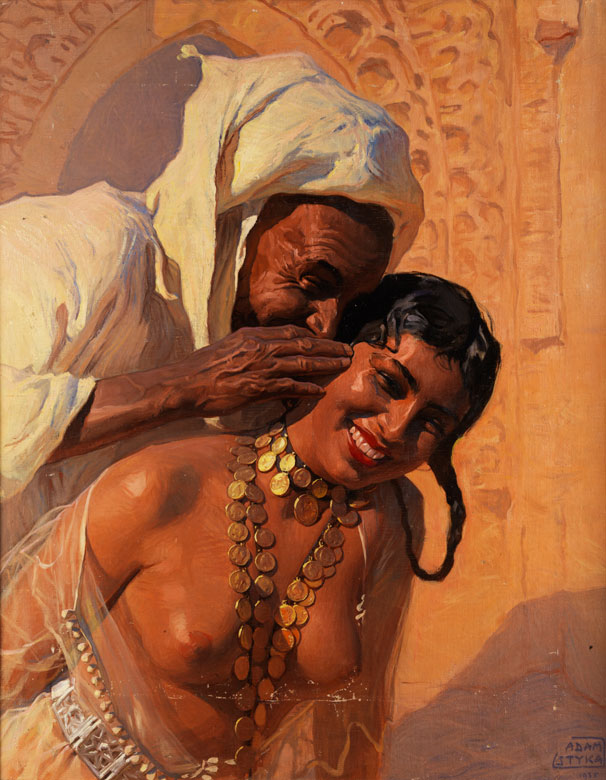
To end this brief tour, we go to the Polish Adam Styka. Born in a family of painters, he also became a great realist painter. One of his specialties was orientalism. He rediscovered the classical theme of nude woman in an orientalist environment and created several paintings of happy people in a sunny world in which nudity transforms to joyfullness.
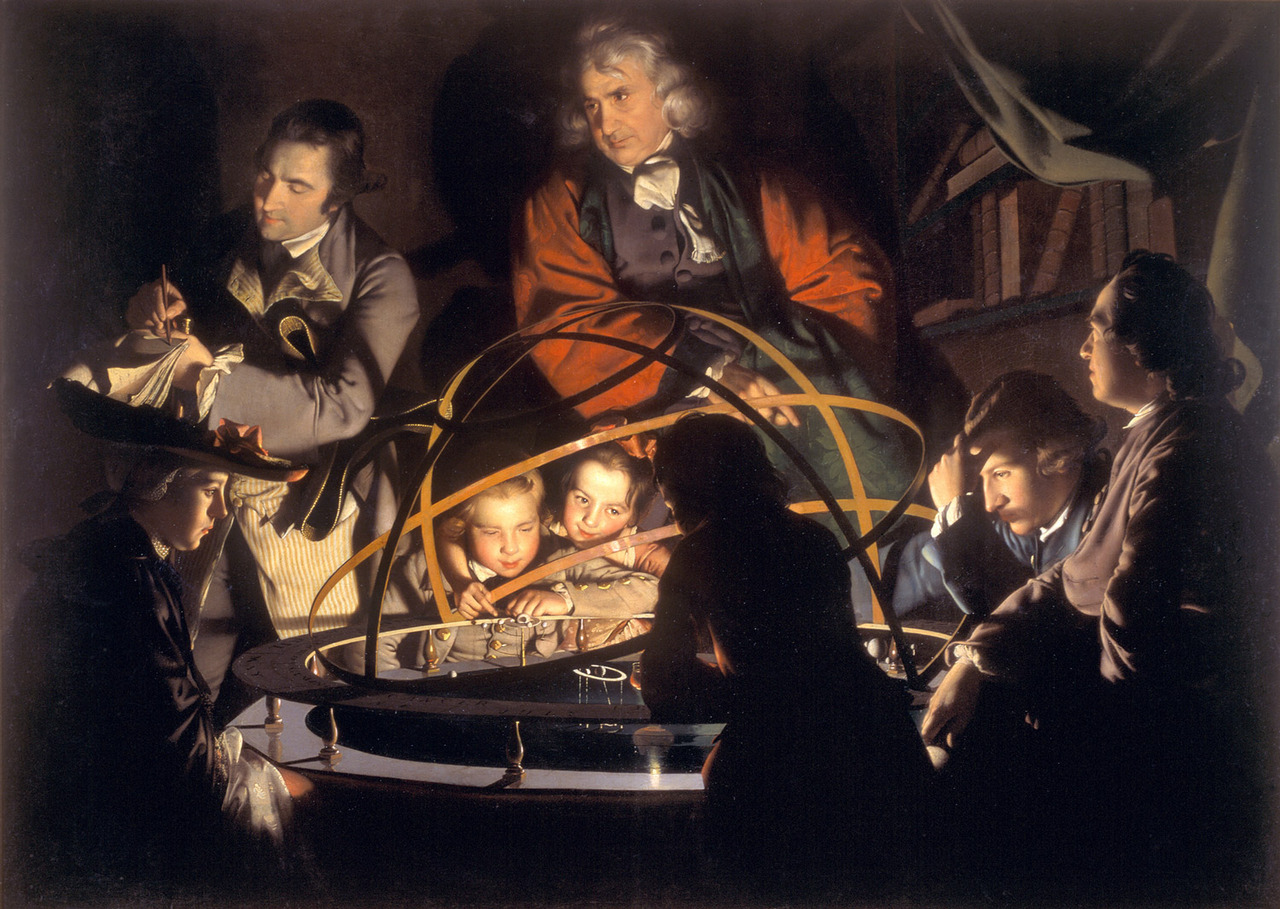
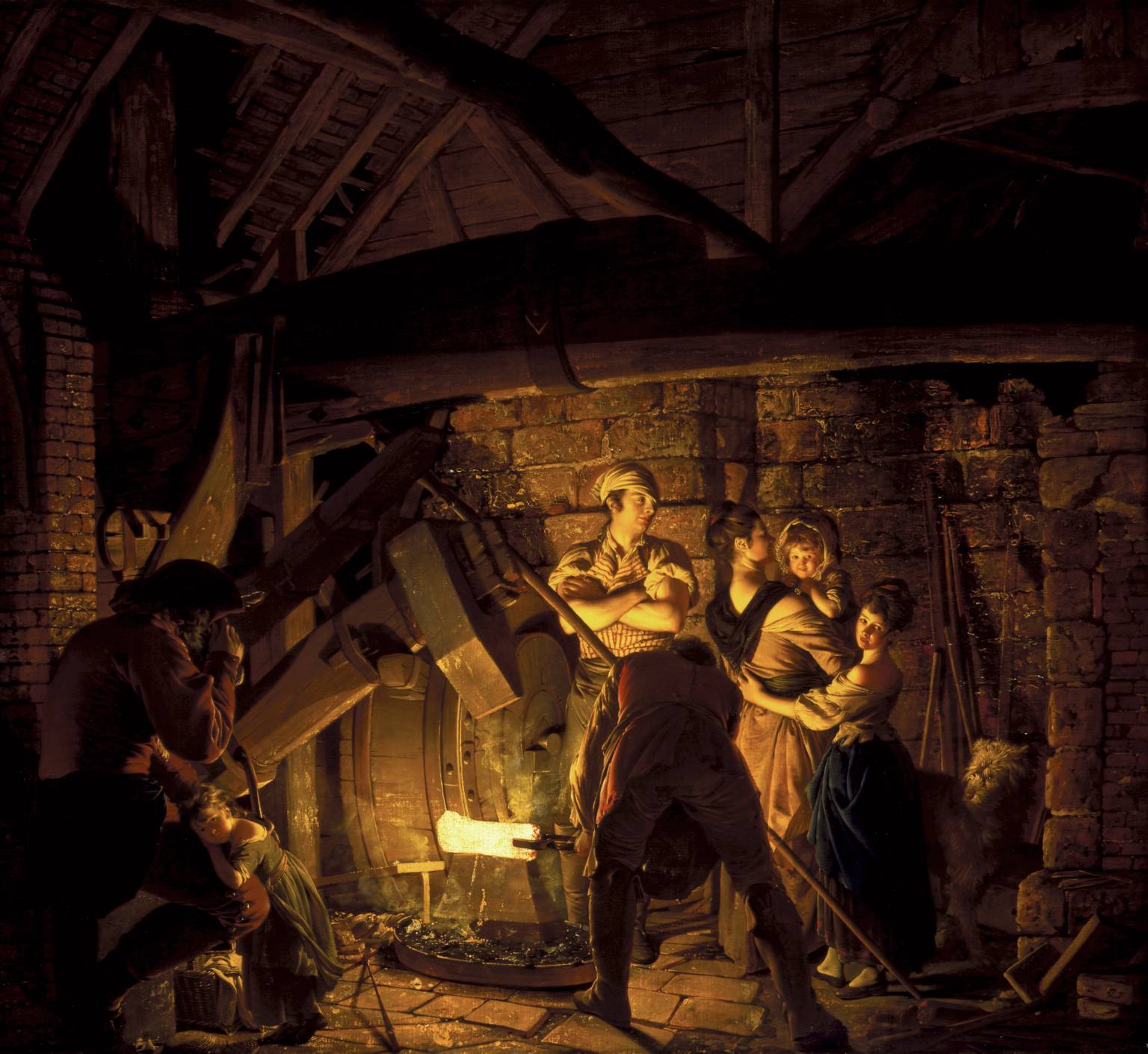
The use of light is one of the major instruments a painter can use to create atmosphere and to highlight details. Some painters use sharp contrasts (tenebrism) and make use of the darkness. The Italian Renaissance painter Caravaggio set the tone in combining a realistic style with dramatic tenebrism. The British painter Joseph Wright of Derby used the same style but used contemporary subjects.
Joseph Wright of Derby, The Orrery, ca 1766
The painting shows a lecturer who is explaining the solar system with a model in which the sun is replaced with a lamp. The faces of the public complement the model by showing different phases of the moon seen from the viewpoint of the distant spectator.
Joseph Wright of Derby, The Iron Forge, 1772
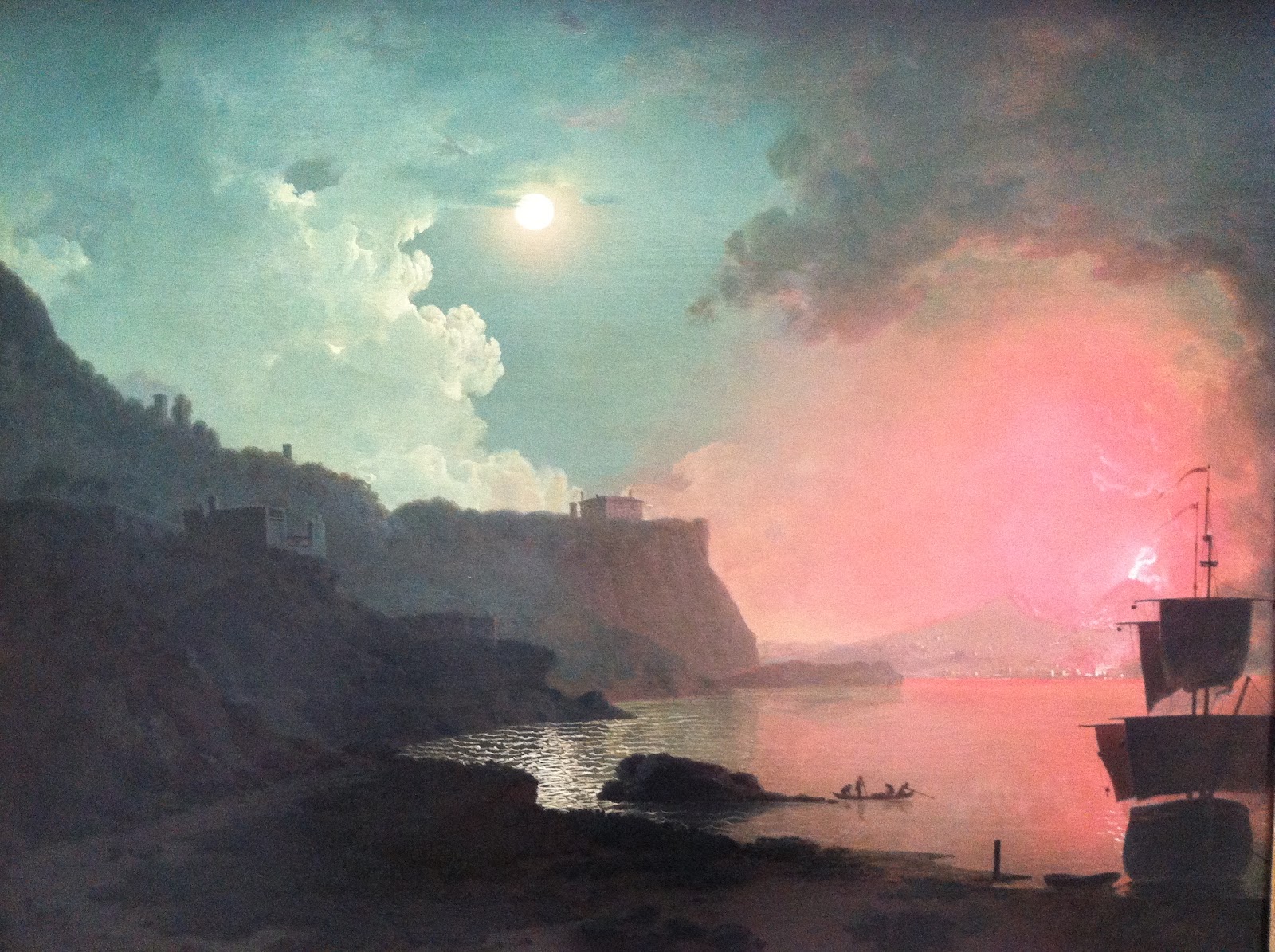
In this painting, the only source of light is the white-hot iron bar. The family of the blacksmith surrounds him and bathes in the light and the warmth. In the next painting a quite exotic natural source of light is used to compete with the moon : the eruption of .the Vesuvius vulcano.
Joseph Wright of Derby, Vesuvius from Posillipo, ca 1788
The subject is this time more romantic with tiny human figures on the water against the background of the mighty nature.
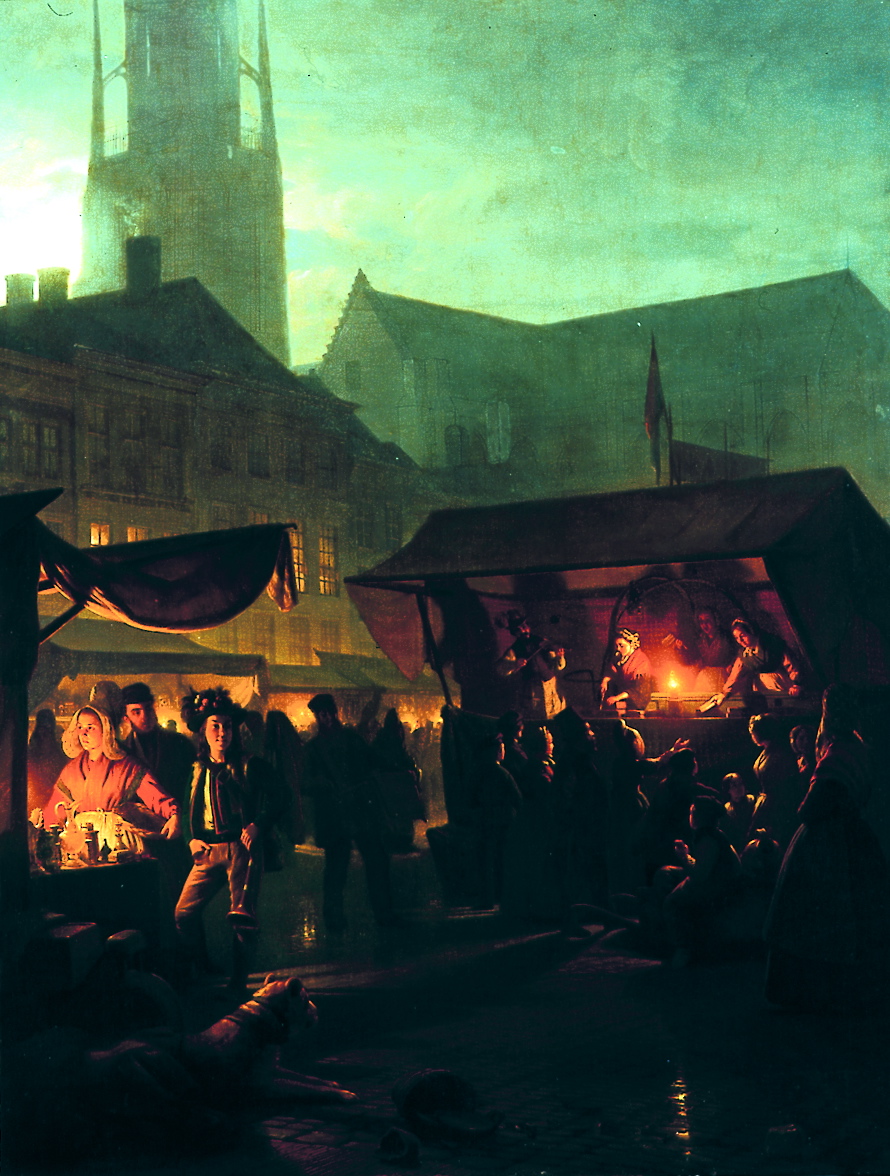
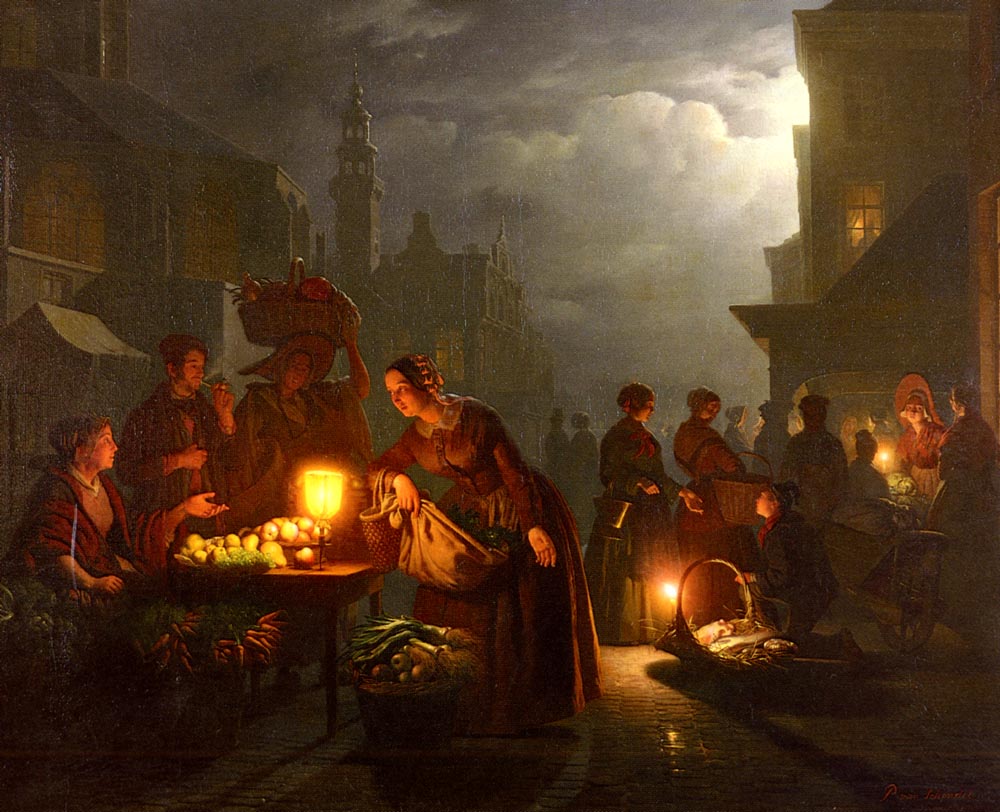
Petrus van Schendel, Jaarmarkt op de Grote Markt in Breda, 1863
Petrus van Schendel was a Dutch-Belgian painter and specialized in night scenes of markets. He made an international reputation and could count Queen Victoria and King Willem II of Holland as his admirers.
Petrus van Schendel, The Candlelit market, ca 1850
Van Schendel used his succes to produce numerous candle-lit night scenes and was nicknamed mr Candle.
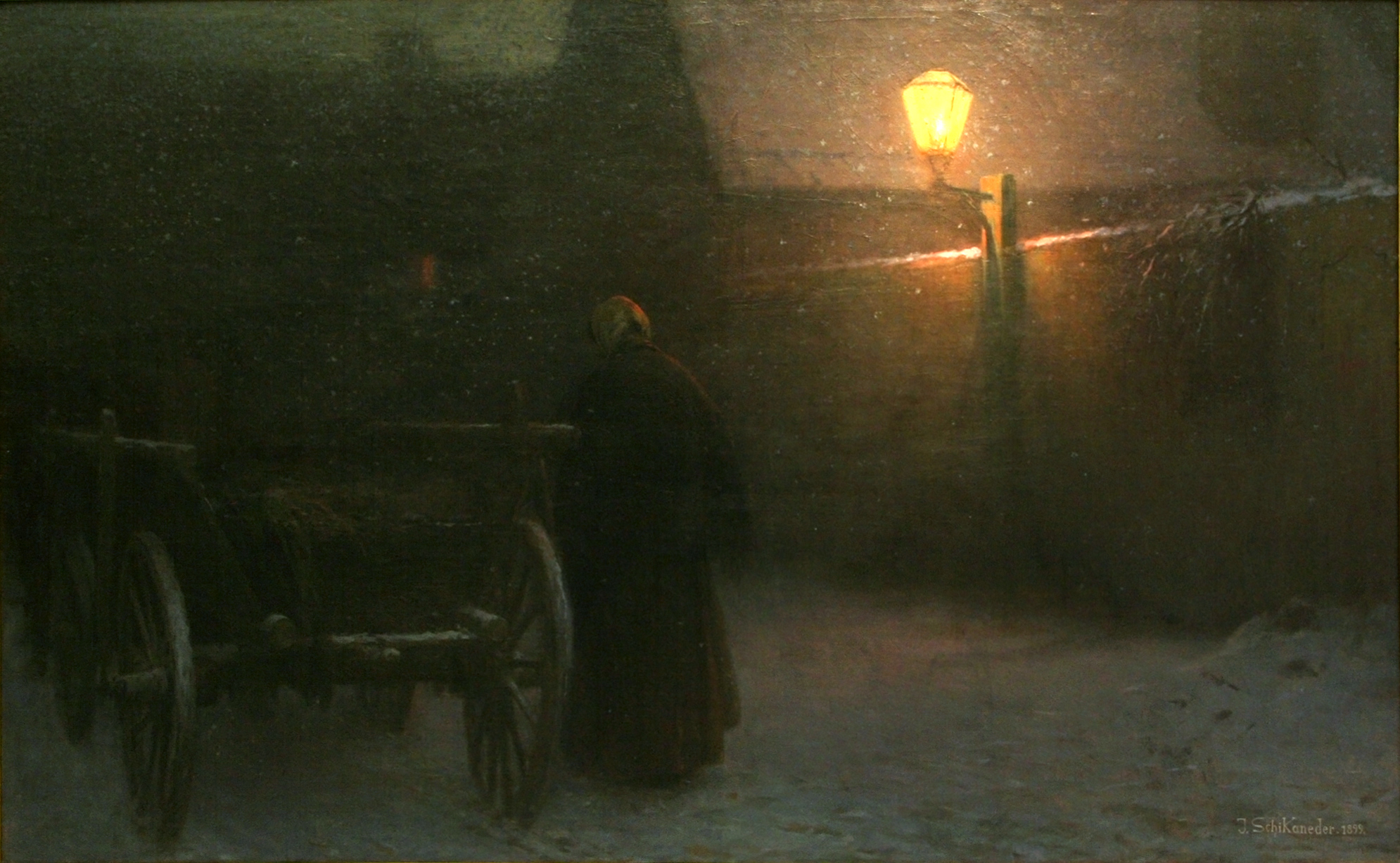
We will continue our tour with the Czech painter Schikaneder who had a melancholic, dream like style in which he could use low light conditions.
Jakub Schikaneder, Twilight in the winter
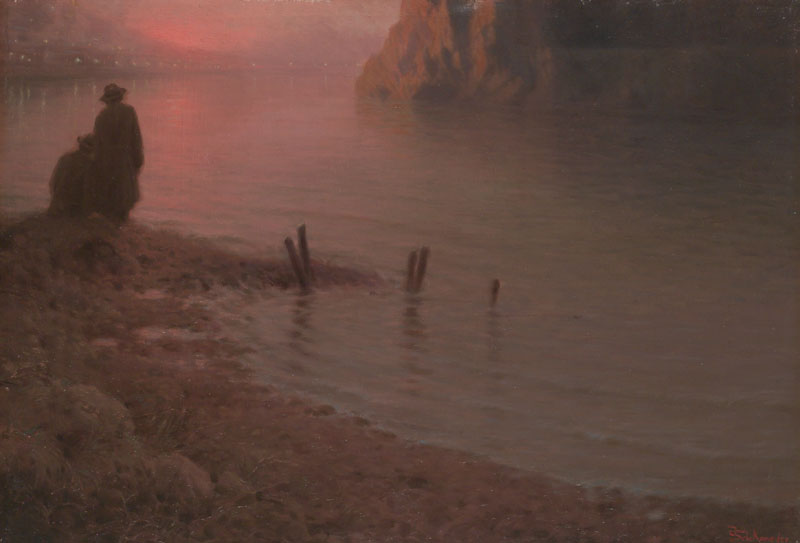
And at the end of the day, the sunset is always an inspiring and magic moment especially at the waterfront.
Jakub Schikaneder, Sunset on the Vlatava river, 1910
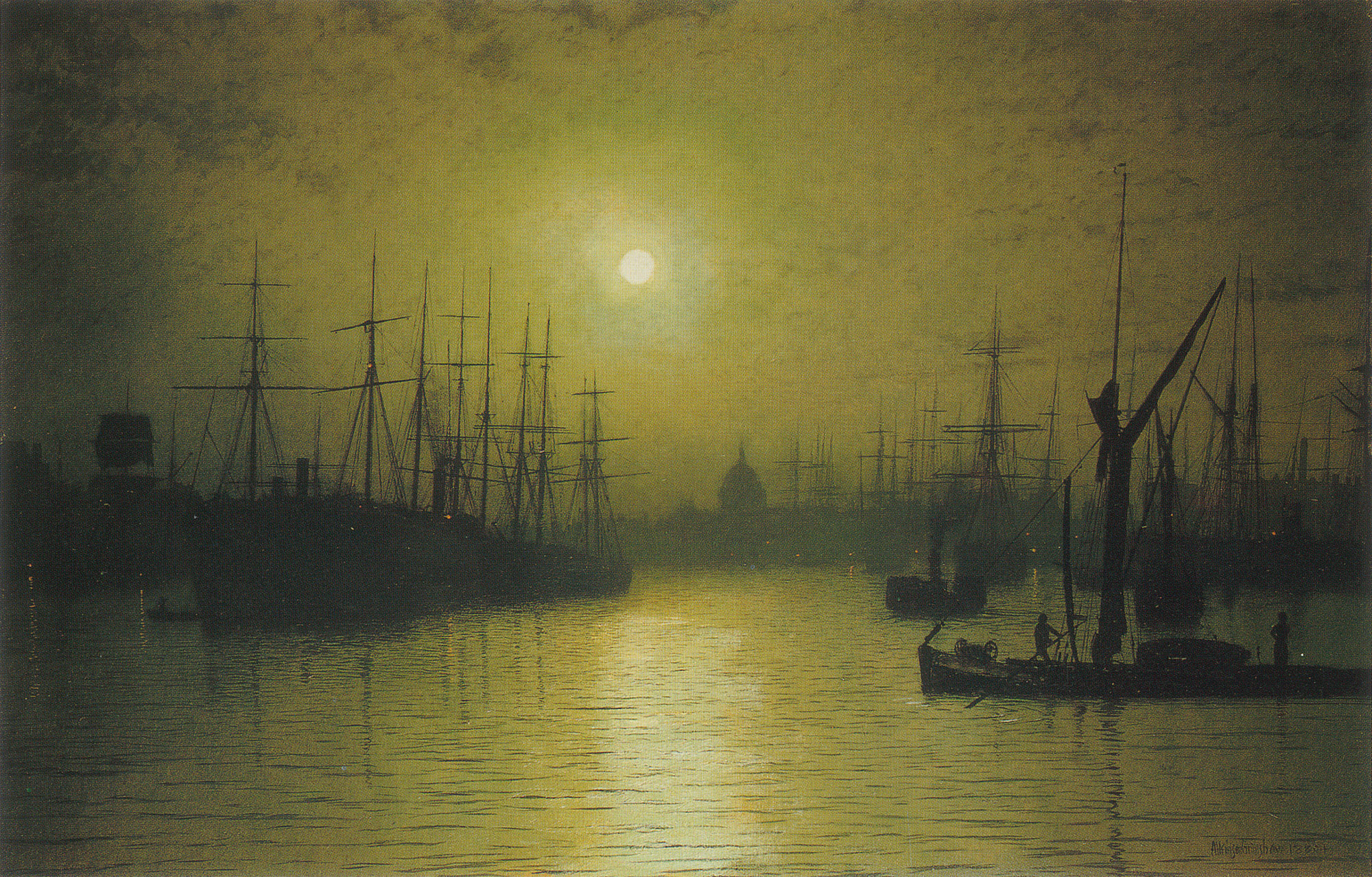
We will end with the British painter John Atkinson Grimshaw. He was autodidact and succeeded in making a living with his paintings. He often used moonlit night conditions such as the following harbour scene.
John Atkinson Grimshaw, Nightfall on the Thames
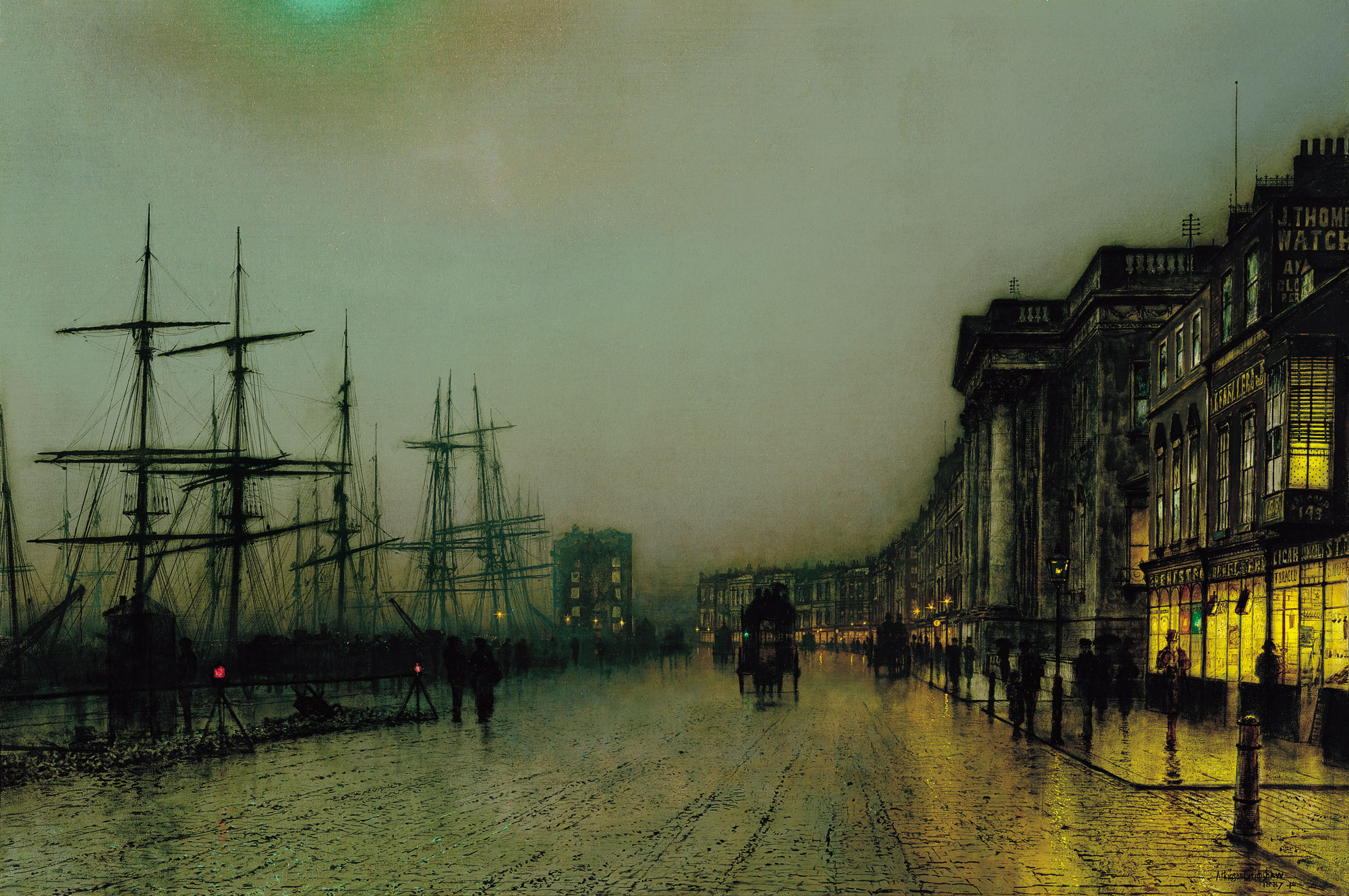
Another great painting is his cityscape of Glasgow in the late evening.The cold wet streets reflect the inviting light of the shops while the boats on the left rest from a long day of sailing.
John Atkinson Grimshaw, Canny Glasgow, 1887
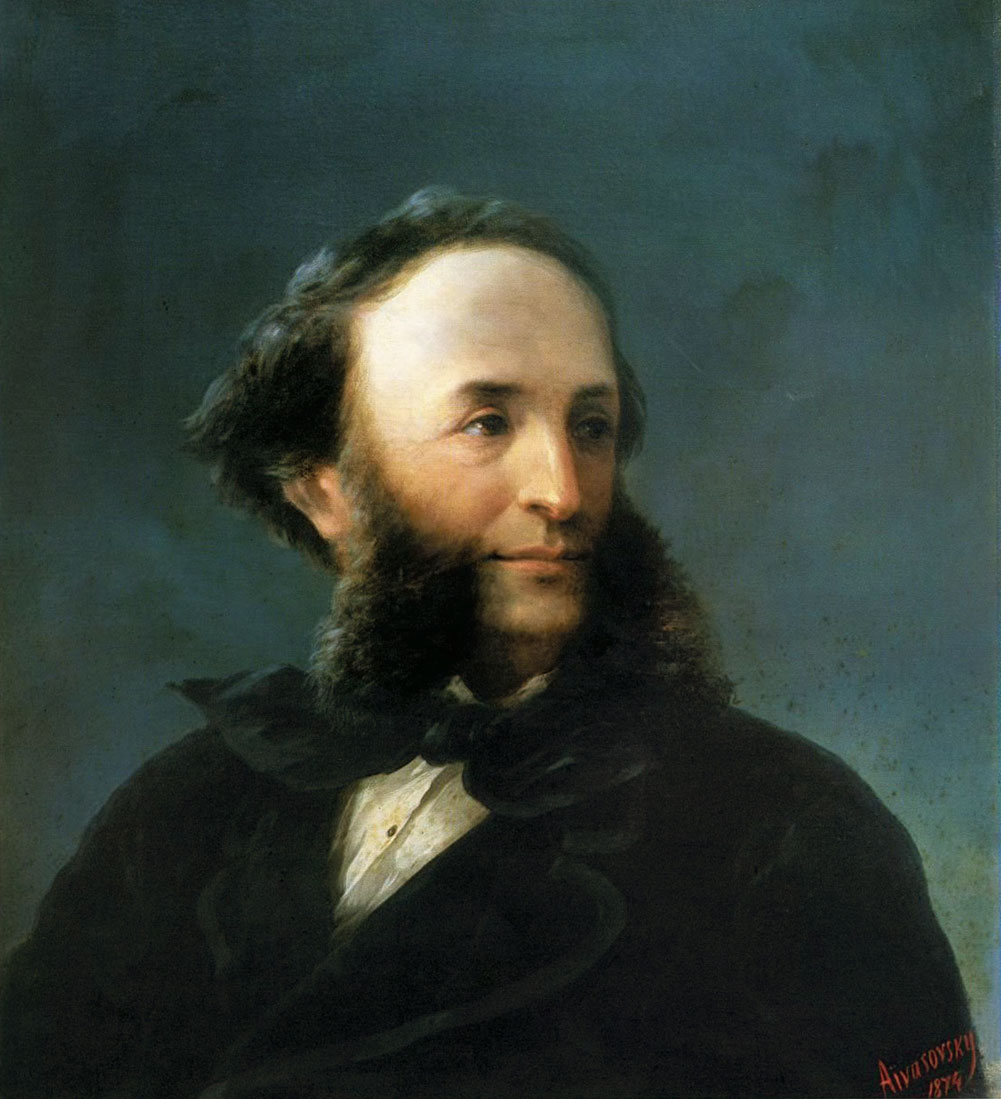
Ivan Aivazovsky (1817-1900)
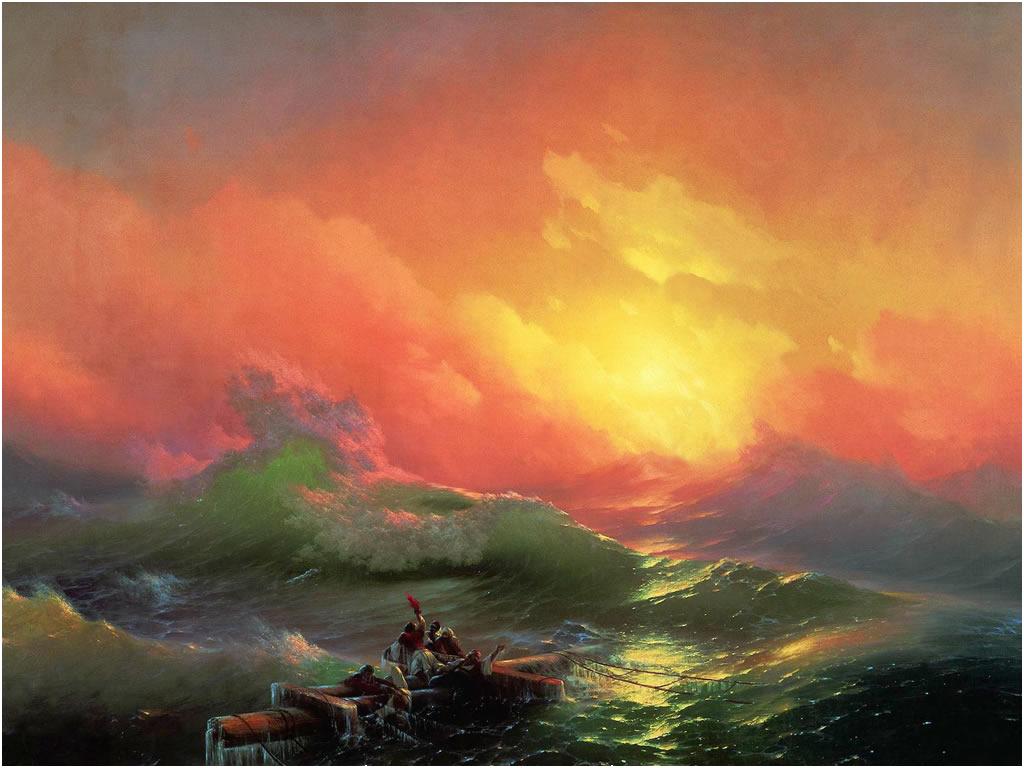
Aivazovsky is most famous for his coastal scenes and seascapes. One of his most famous paintings is the “The ninth wave” in which some shipwreck survivors clench to the broken mast. He had a productive life and painted over 6000 paintings.
Some of the most beautiful are reproduced in this bestseller :
This website uses cookies to improve your experience. We'll assume you're ok with this, but you can opt-out if you wish.AcceptRead More
Privacy & Cookies Policy
Privacy Overview
This website uses cookies to improve your experience while you navigate through the website. Out of these, the cookies that are categorized as necessary are stored on your browser as they are essential for the working of basic functionalities of the website. We also use third-party cookies that help us analyze and understand how you use this website. These cookies will be stored in your browser only with your consent. You also have the option to opt-out of these cookies. But opting out of some of these cookies may affect your browsing experience.
Necessary cookies are absolutely essential for the website to function properly. This category only includes cookies that ensures basic functionalities and security features of the website. These cookies do not store any personal information.
Any cookies that may not be particularly necessary for the website to function and is used specifically to collect user personal data via analytics, ads, other embedded contents are termed as non-necessary cookies. It is mandatory to procure user consent prior to running these cookies on your website.