
Horror
The 19th century was the age of the horror story. A lot of today’s famous icons which were depicted in the cinema in the 20th century, were born in the 19th century such as Frankenstein (1818), Edgar Allen Poe’s stories, Dr Jekyll and Hyde (1886) and Dracula (1897).
The literary genre consisted of the so called gothic novel. The stories were often located in medieval buildings (hence the name “gothic”) or ruins. These surroundings formed a romantic stage for the storytelling and this exact feeling was depicted by various painters also.
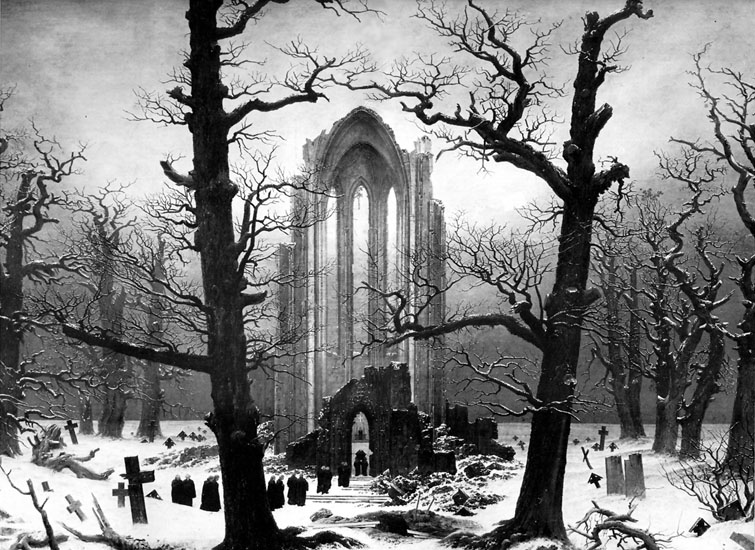
Caspar David Friedrich, Monastery Graveyard in the snow, 1817 (black and white photograph, original destroyed in world war II)
Another German master of spooky ruins was Carl Blechen, Although the sleeping figure and the friendly sunlight do add some serenity to the picture, it is not hard to imagine what this dramatic building would turn to during a dark night.
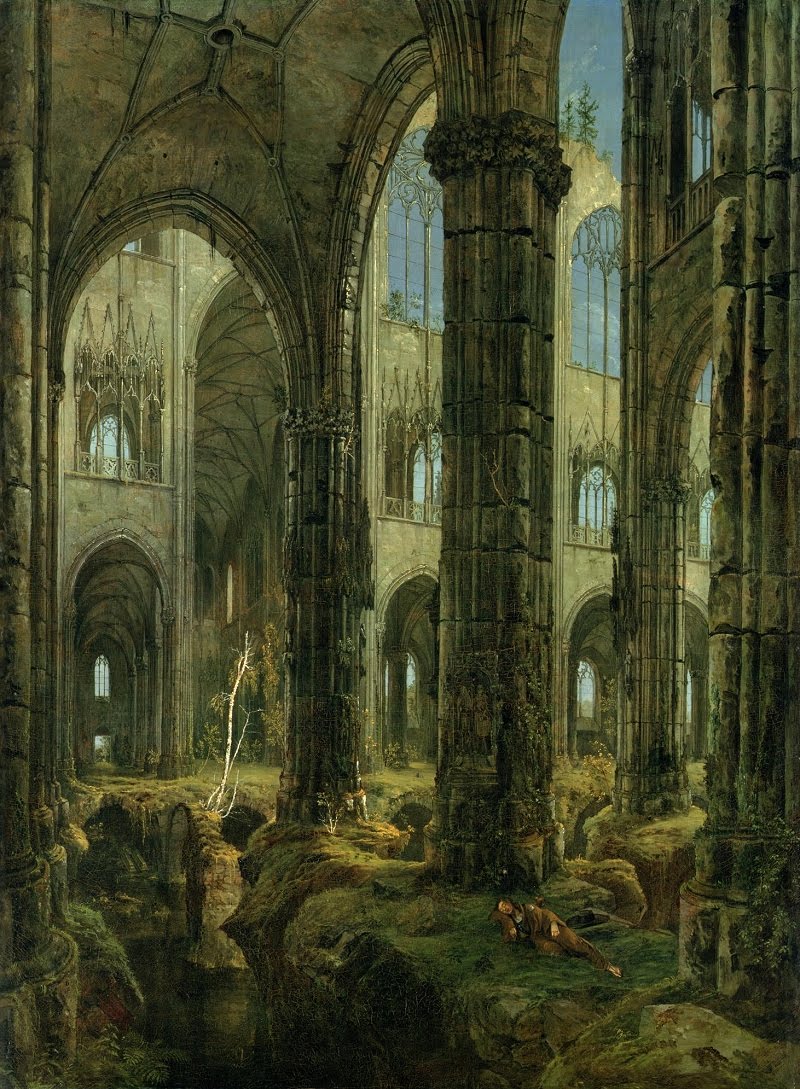
Carl Blechen, ruins of a gothic church, 1826
Apart from the gothic buildings, the horror genre also used the sometimes twisted minds of people. The view on mental illness was quite different than today. Mental institutions were even used as a zoolike experience in which the public could take a sunday afternoon walk. The following picture illustrates the London Bethlem Hospital, one of the first mental hospitals in Europe.
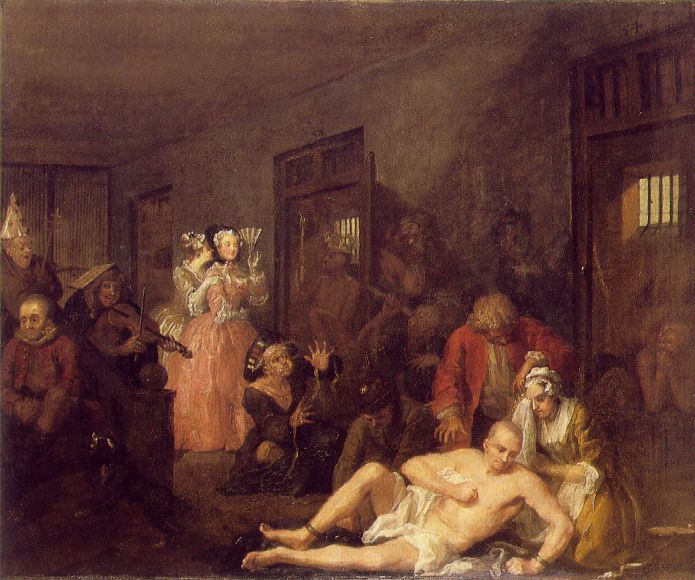
William Hogarth, a Rake’s progress : the rake in Bedlam, 1735
But the line between health and disease is thin. In extreme conditions, ordinary people transform to monsterlike creatures. A famous example is the French Gericault who painted the gruesome wreckage of the vessel “Medusa”. The initial 147 survivors had to sustain an ordeal of starvation, dehydration and cannibalism in which ultimately just 15 people survived.
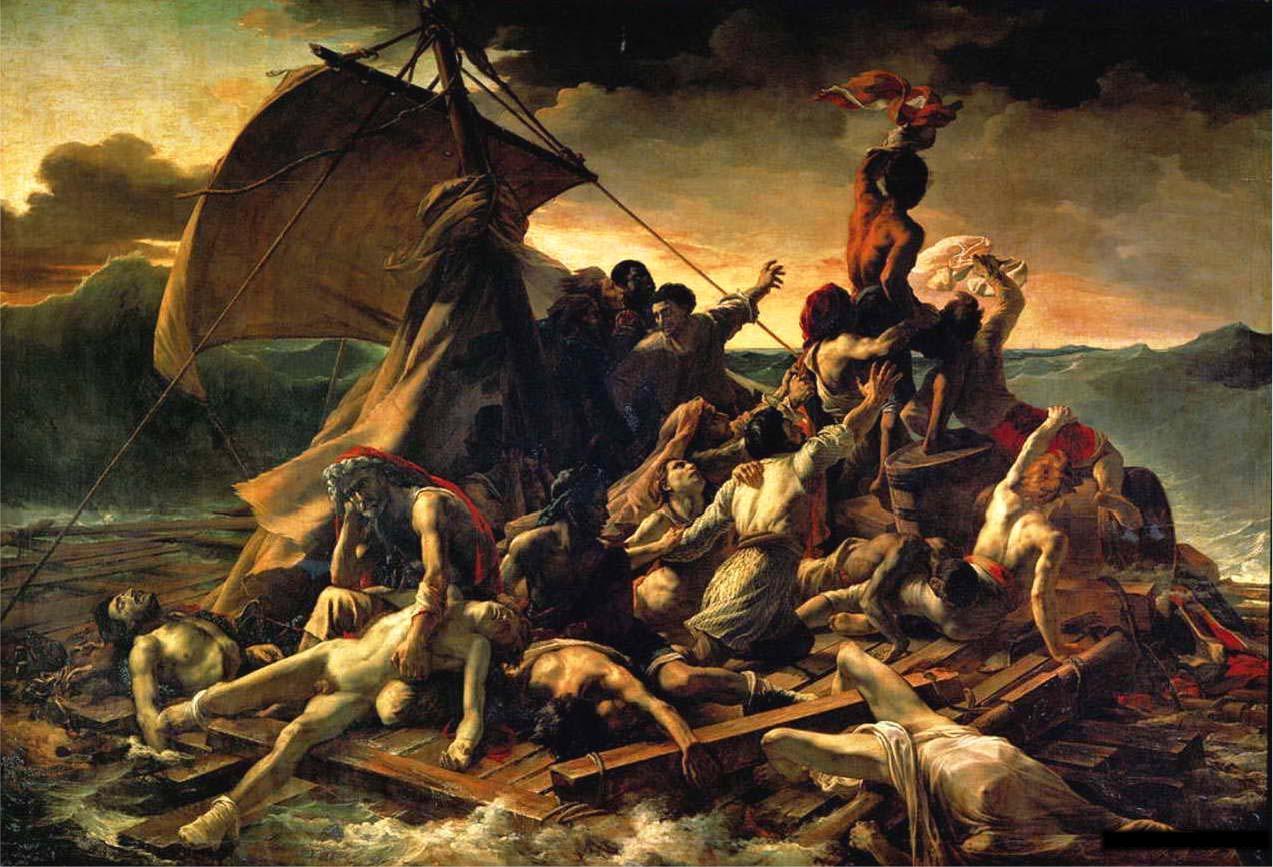
Theodore Gericault, The raft of the Medusa, 1818
Another romantic painter who did like the more dark side of life was the Belgian Antoine Wiertz. This quite unknown painter did succeed in winning the highly prestigious prix de Rome in 1832. His museum in Brussels at the rue Wiertz is free to attend and neighbour to the European Parlement.
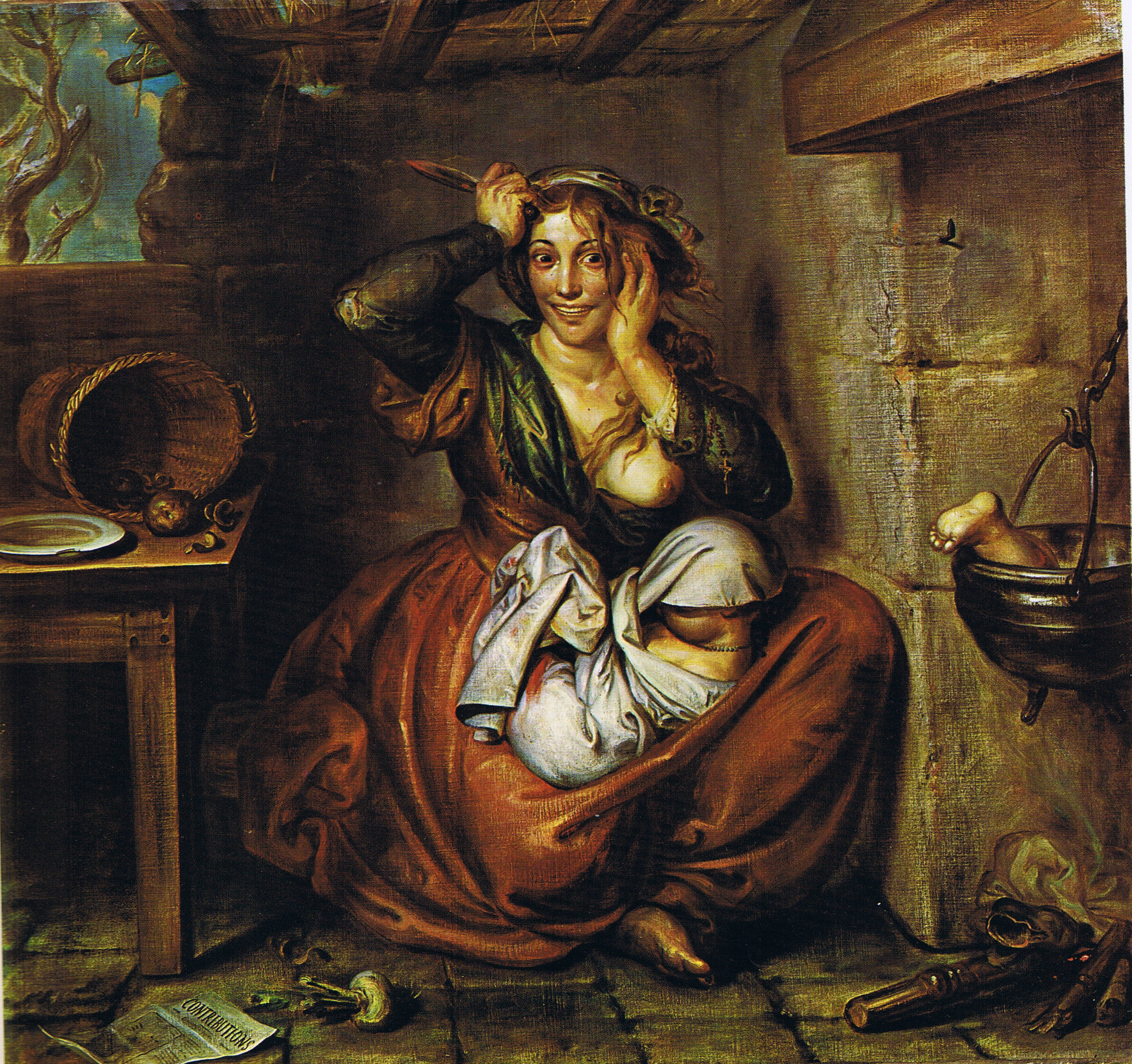
Antoine Wiertz, Hunger, Madness and the crime, 1857
The final work in this guided tour is also from Wiertz and depicts the fear to be buried alive by mistake. This theme was quite popular in the 19th century (Edgar Allen Poe wrote a story about it in 1844). Special designed burial equipment was invented (safety coffins with airtubing and alarm systems with bells) and in some countries (including the Netherlands) legislation was made to postpone the burial several days and to observe the corpse in special morgues. In this painting of Wiertz, a victim of a cholera epidemic is depicted. On the coffin is a mark : certified death by our doctors. Before the invention of the stethoscope, the declaration of death could be tricky especially if the patient had a weak pulse and a shallow respiration. Therefore the painted scenario maybe not too far from reality, especially in epidemics with mass casualties.
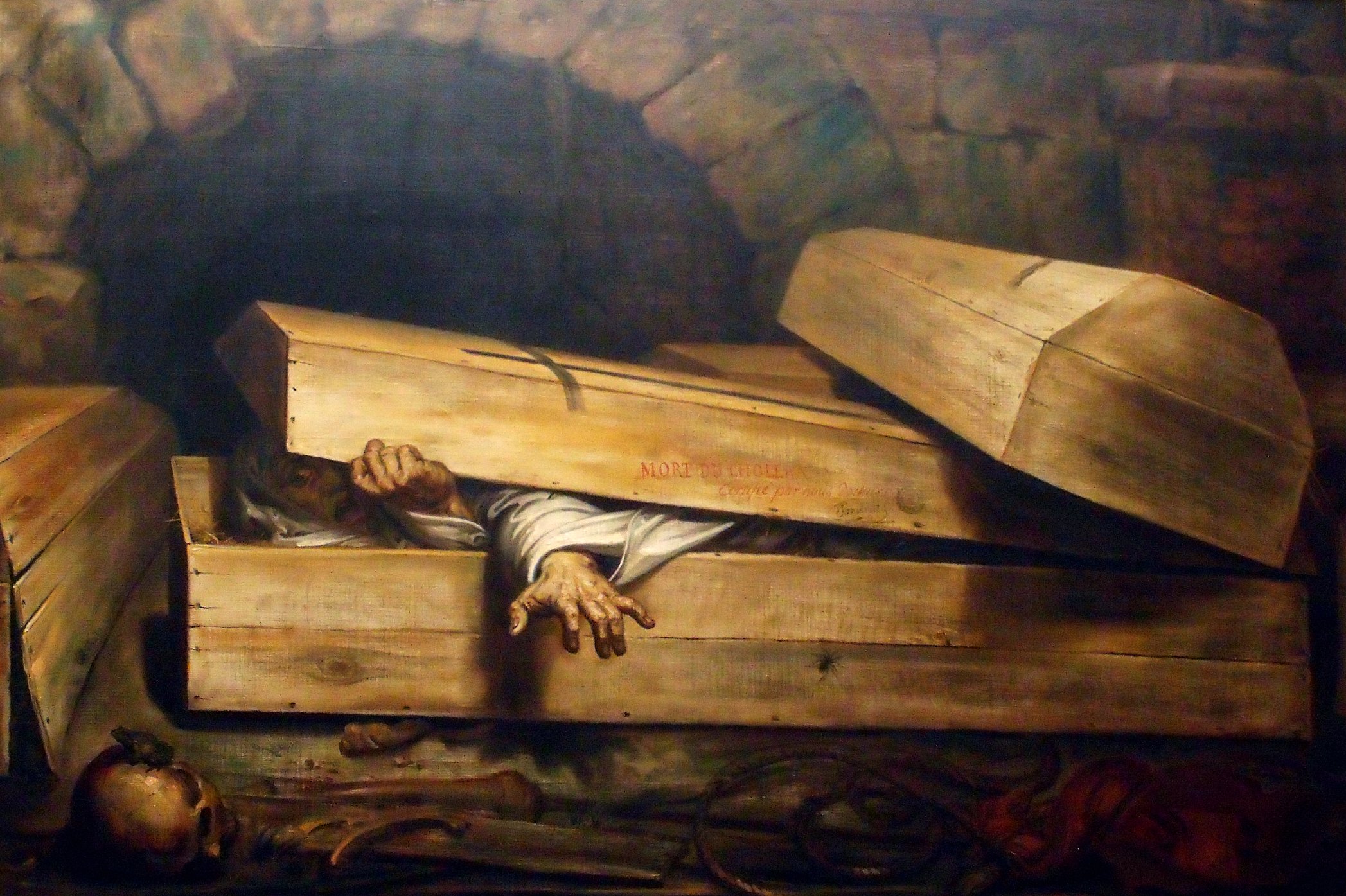
Antoine Wiertz, the premature burial, 1854
Bestiarium
In the Middle Ages a bestiarium was a popular book. Originating from old Egypt, Hebrew and Indian stories, various animals and other creatures were introduced and described with moral lessons which already started in the first centuries AD. In this guided tour, we will meet some of this creatures which are wonderful to imagine and to depict.
We will start with the mythological unicorn.
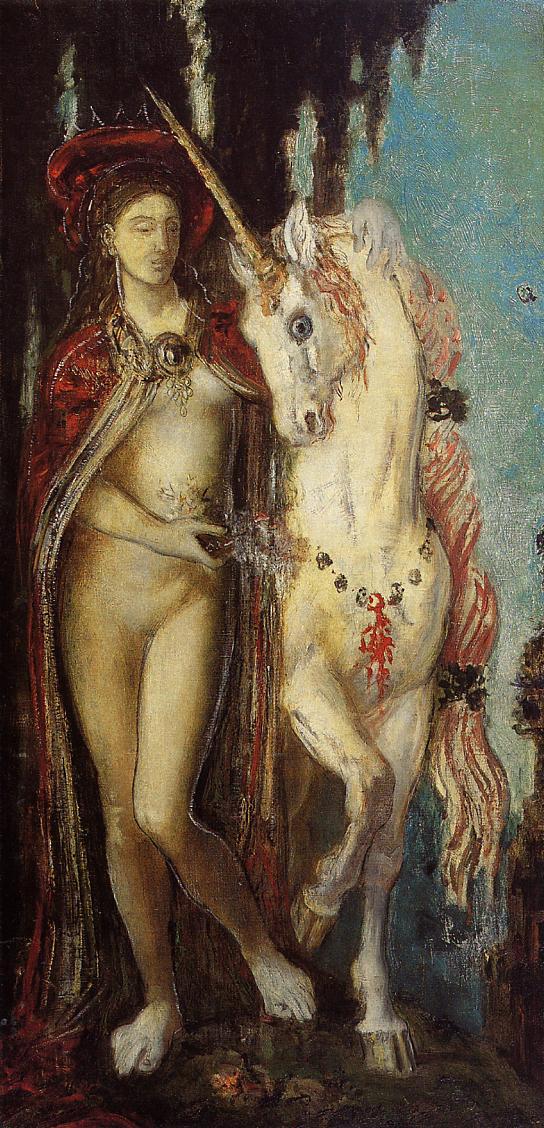
Gustave Moreau, Unicorn, 1885
The unicorn was a fierce creature and hard to capture for hunters. Leonardo da Vinci described the classical hunting method : “The unicorn, through its intemperance and not knowing how to control itself, for the love it bears to fair maidens forgets its ferocity and wildness; and laying aside all fear it will go up to a seated damsel and go to sleep in her lap, and thus the hunters take it”.
In the Middle Ages the horns of a unicorn were very precious. Often the spiral tusk of an arctic whale (narwhal) was selled by northern traders to wealthy persons including Queen Elisabeth of England.
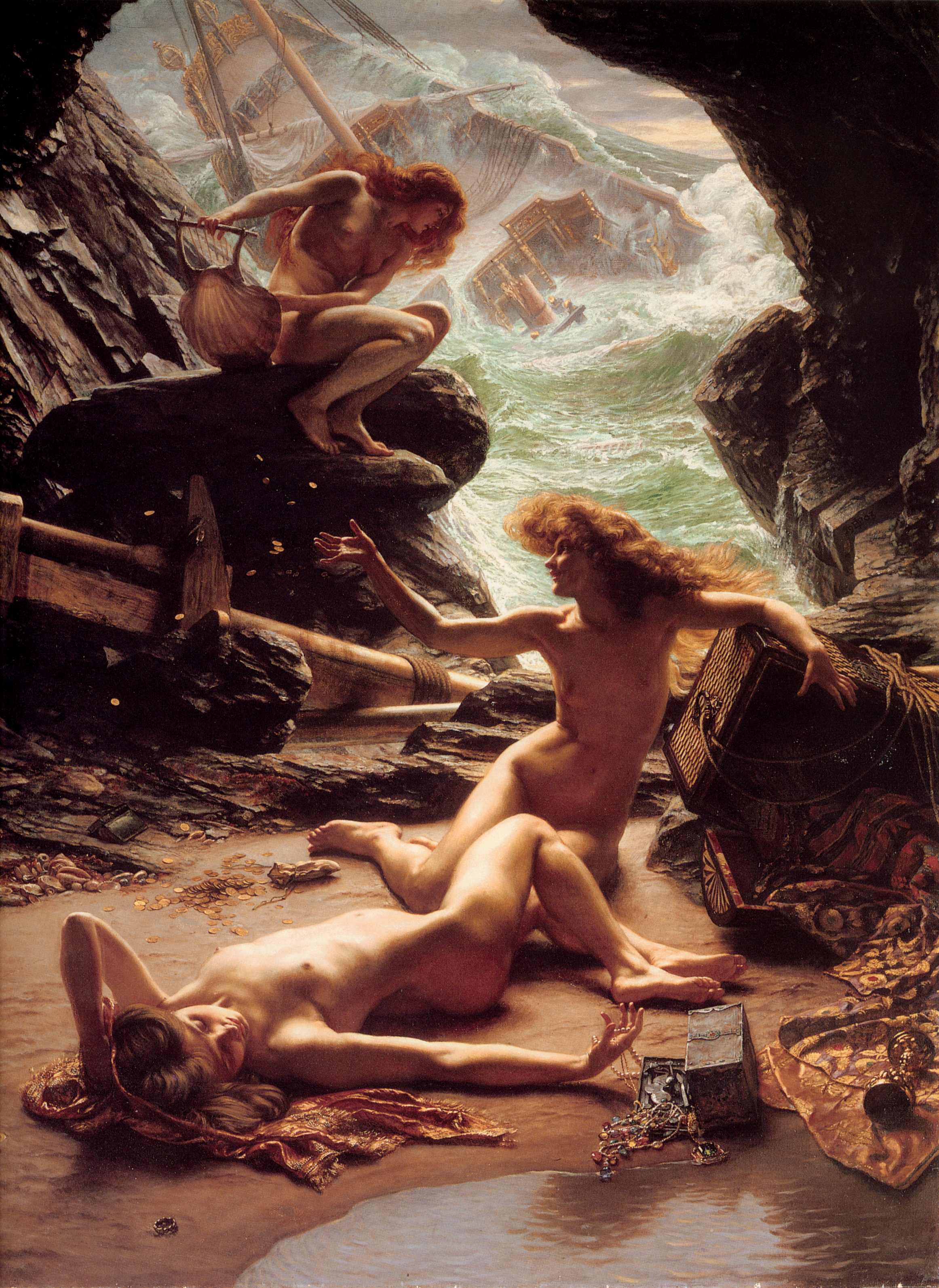
Edward John Poynter, Cave of the storm nymphs, 1903
We switch to sirens, water creatures that were daughters of the watermonster Ceto and hence also were dangerous creatures. They played on their instruments to lure innocent sailors to shipwreck them. In the classical story of Odysseus, he was warned for the sirens and curious to their songs, he let himself be tied to the mast of his boat and let his sailors put beewax in their ears. Not all woman swimming in the sea were bad although, the Nereids were helpful seanymphs and were depicted in the following painting of Sorolla.
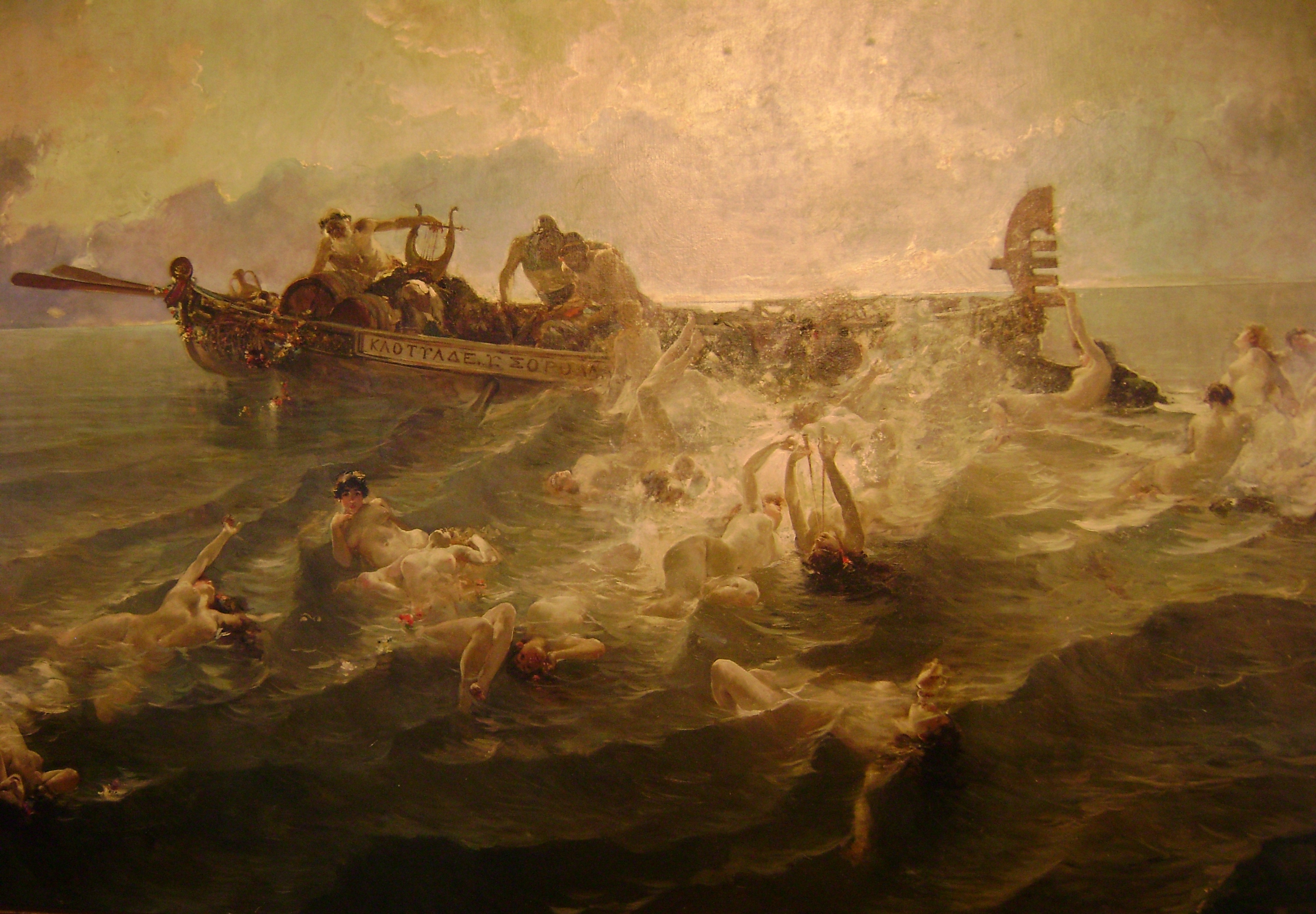
Joaquín Sorolla y Bastida, Las Nereidas, 1886
From sea creatures back to land, there are a couple of interesting creatures who are partial human and partial animal. One of the most famous is the centaur : half human and halve horse. A beautiful example of a centaur statue can be found in Florence at the famous Loggia, one painter who depicted a centaur was Bocklin.
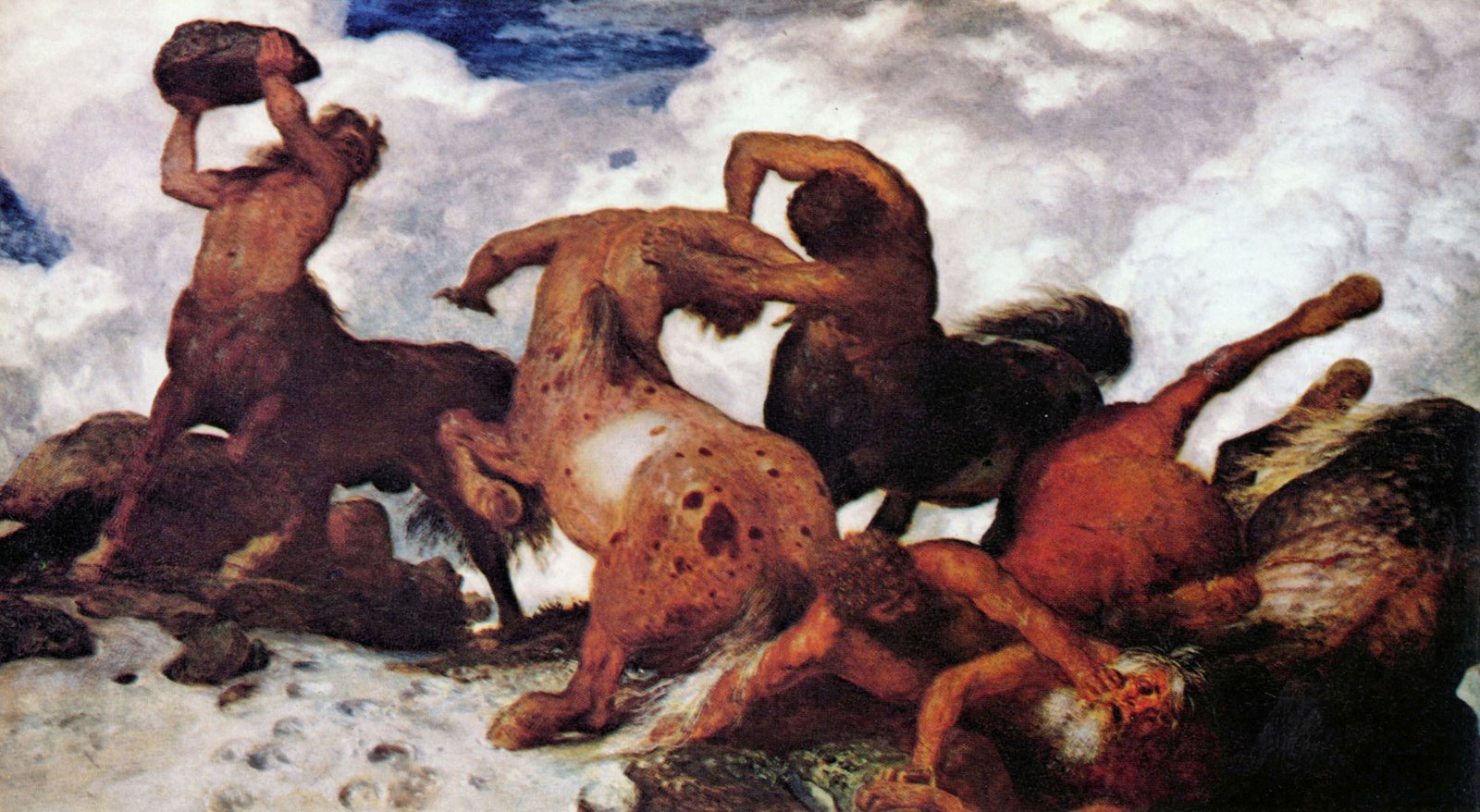
Centaurs, Arnold Bocklin, 1873
Another example from Moreau is a flying centaur, a chimerae.
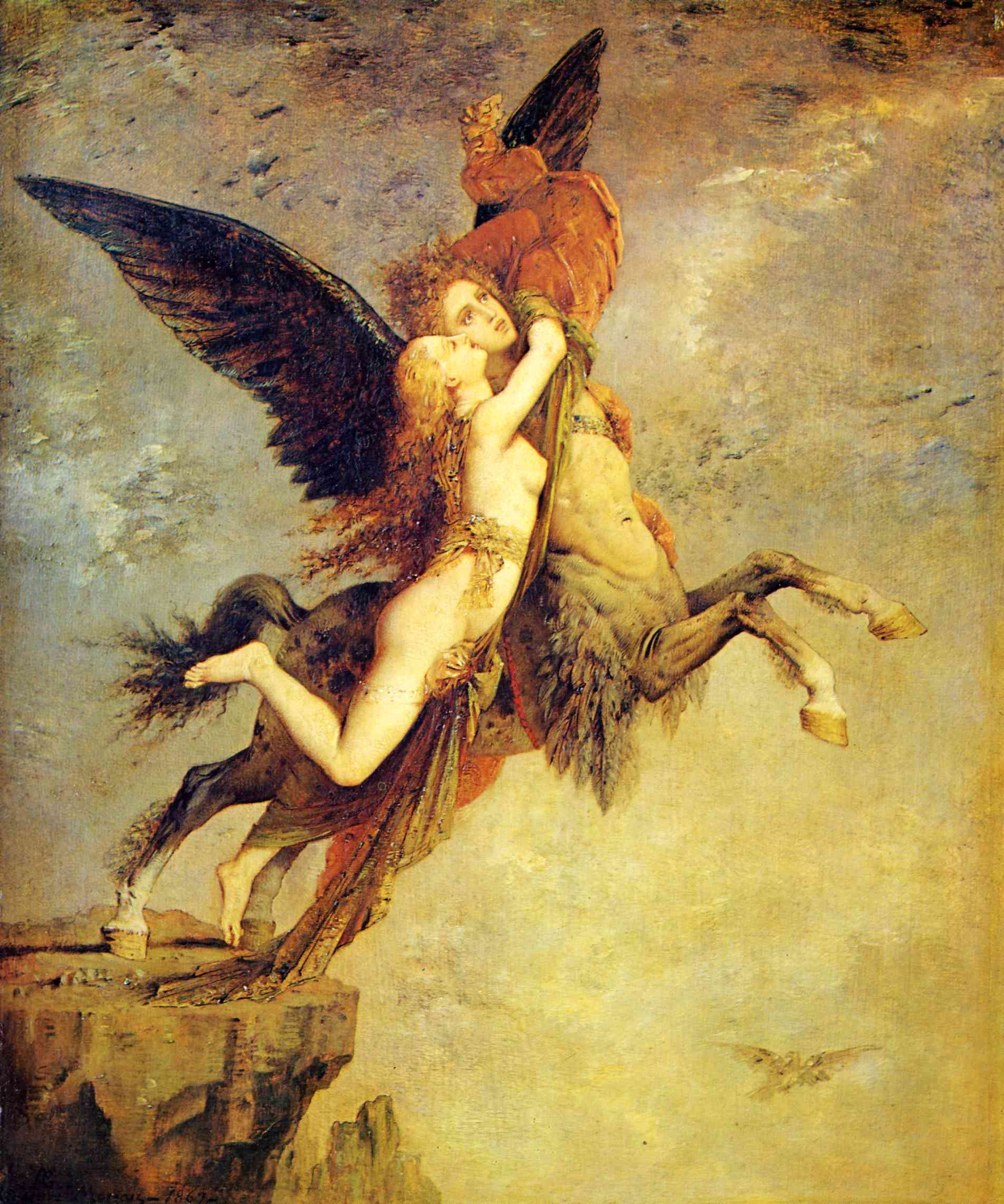
Gustave Moreau, The Chimera, 1867
But one of the most inspiring landcreatures is the dragon. The dragon is an universal monster who is is found in literature and visual arts ranging from Europe to China. A famous story is the one of Saint George, the dragon slayer. In the oldest version, Saint George by accident, stumbles upon a princess who is to be fed to a local dragon somewhere in present day Libya. The evil dragon threatened the local people that he wanted two daily sheeps and if they could not deliver he had to eat a human being, chosen by lottery. Saint George captures the dragon and saves the princess and in return for a mass baptism of the people, he slaughters the dragon in the end.
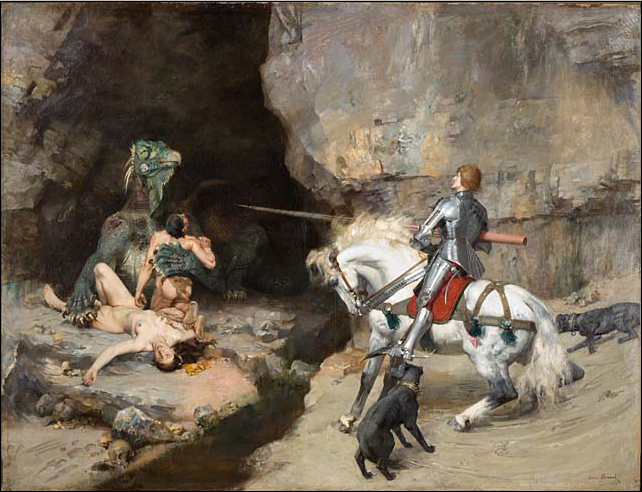
GUSTAVE SURAND, Saint Georges and the dragon, 1888
This heroic fight has also been depicted by Briton Riviere from another perspective. The dragon is already slain, but our hero and his horse are so tired of the fight that they cannot stand on their feet, and rest next to the dead body of the dragon.
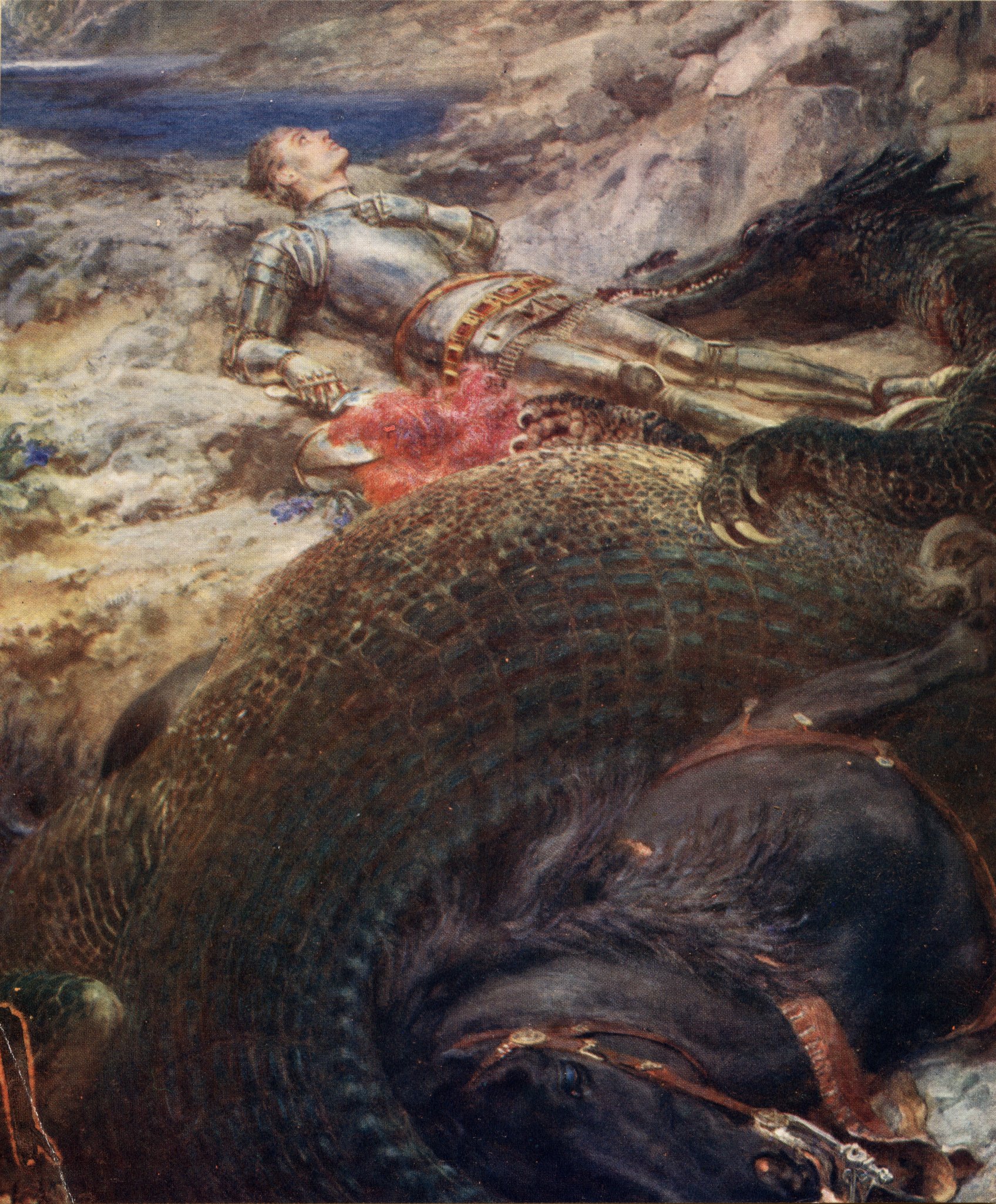
Briton Riviere, St Georges and the dragon, 1908
The 19th century was also the time that big lizard like bone remains were found who were named megalosaurus (big lizard) and after the discovery of other types (ie iguanodon) the family name of dinosaur (fearful lizard) was coined in 1842. John Martin was one of the few who actually painted his imagination of living dinosaurs.
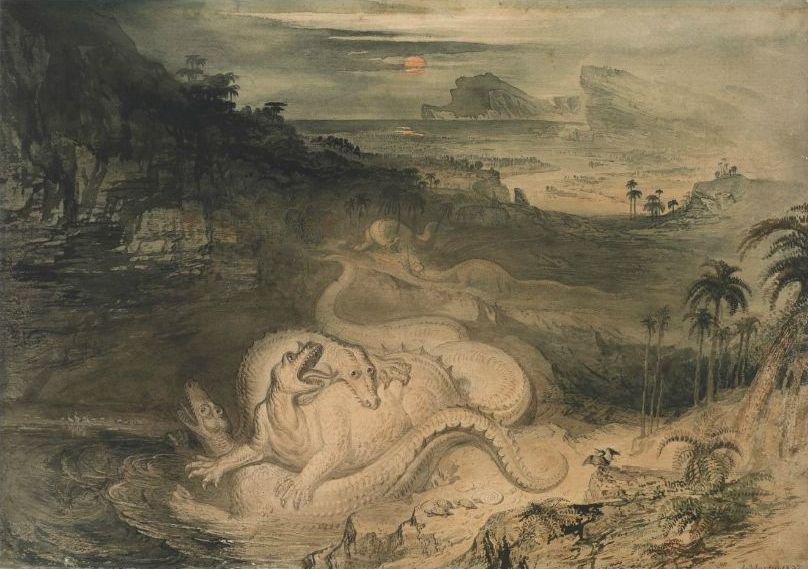
John Martin, Country of the Iguanodon, 1837
We will end this guided tour by somewhat more friendly creatures than dragons and dinosaurs : lovely innocent fairies.
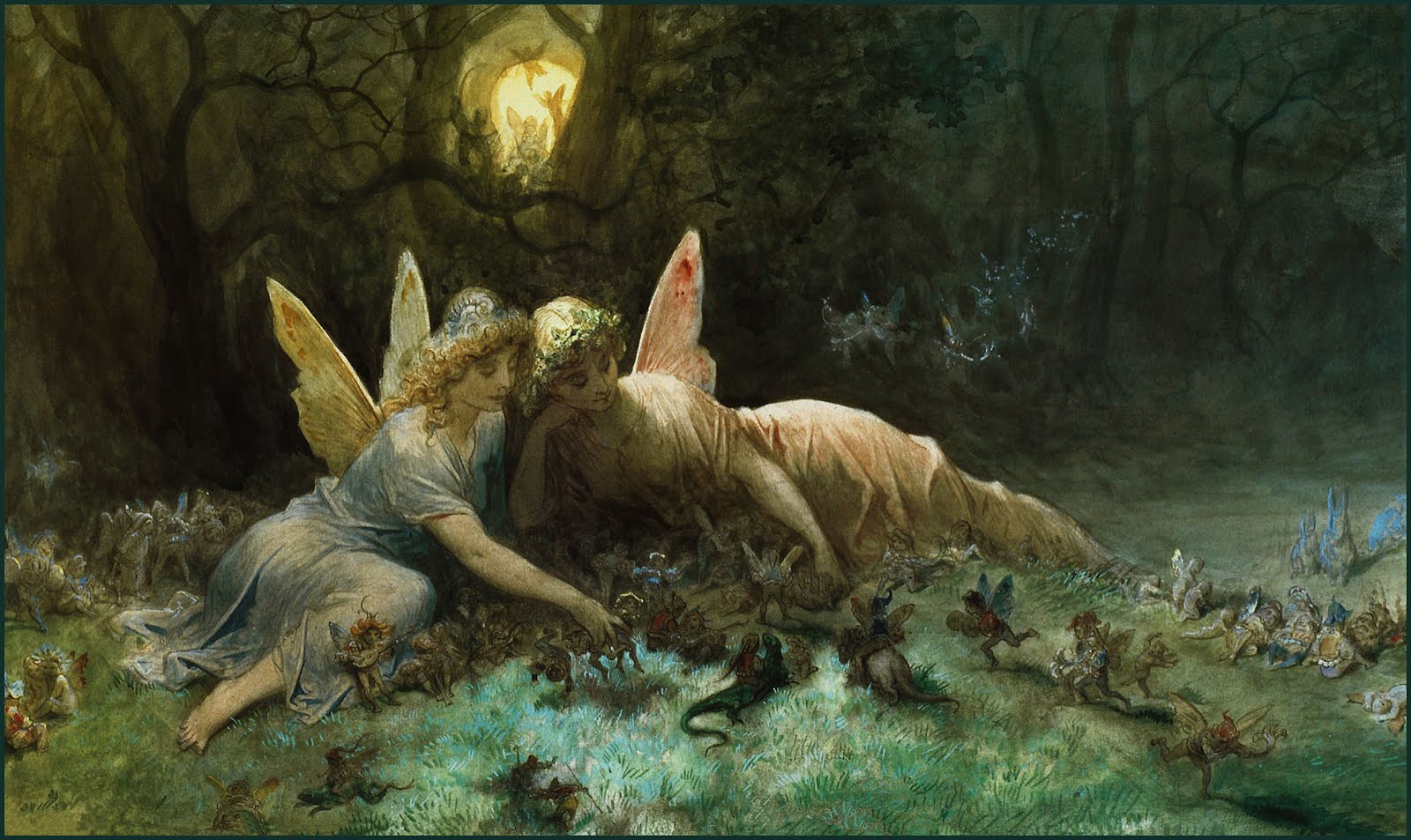
Gustave Dore, The fairies
Poverty
The 19th century was a period of social and economic change and a century of industrialisation. Compared to our current standards of social welfare, there was bitter poverty for many people and the society was harsh regarding help. The common idea was that people were responsible for the circumstances they lived in and that poor people were lazy people who did not put enough effort to improve their situation.
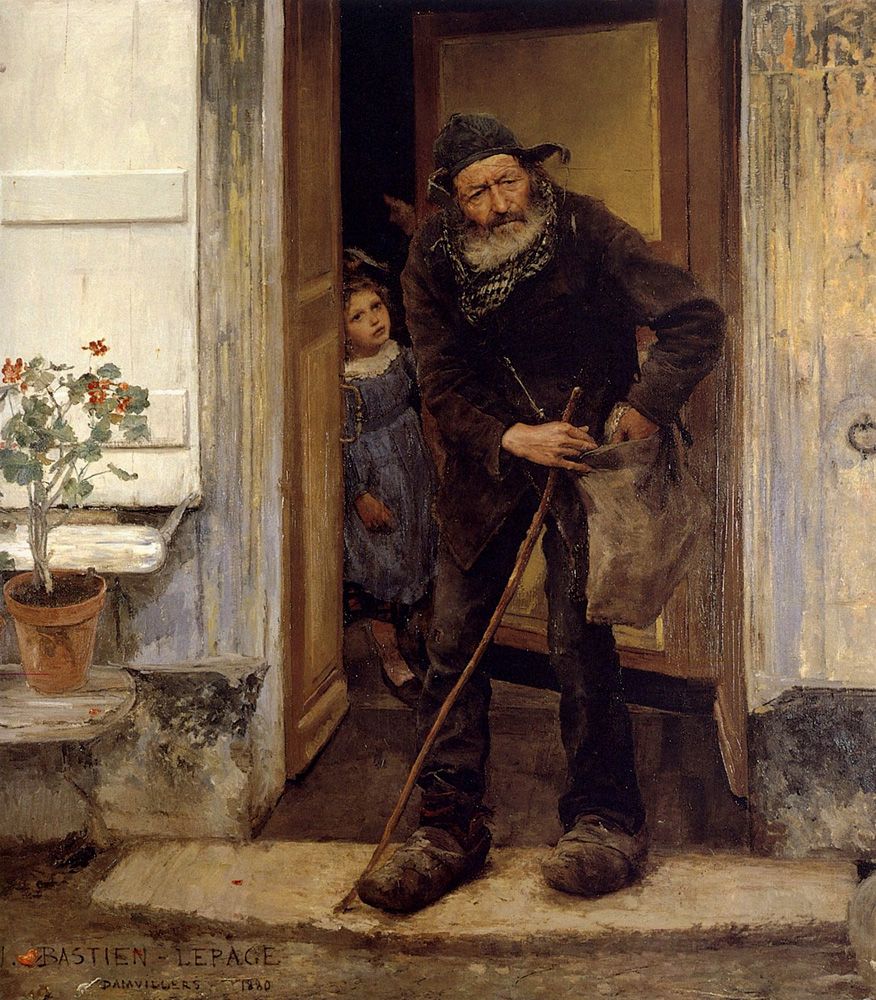
Jules Bastien Lepage,The Beggar
Of course there were exeptions and if someone had a handicap and especially a child, people tended to be more merciful.
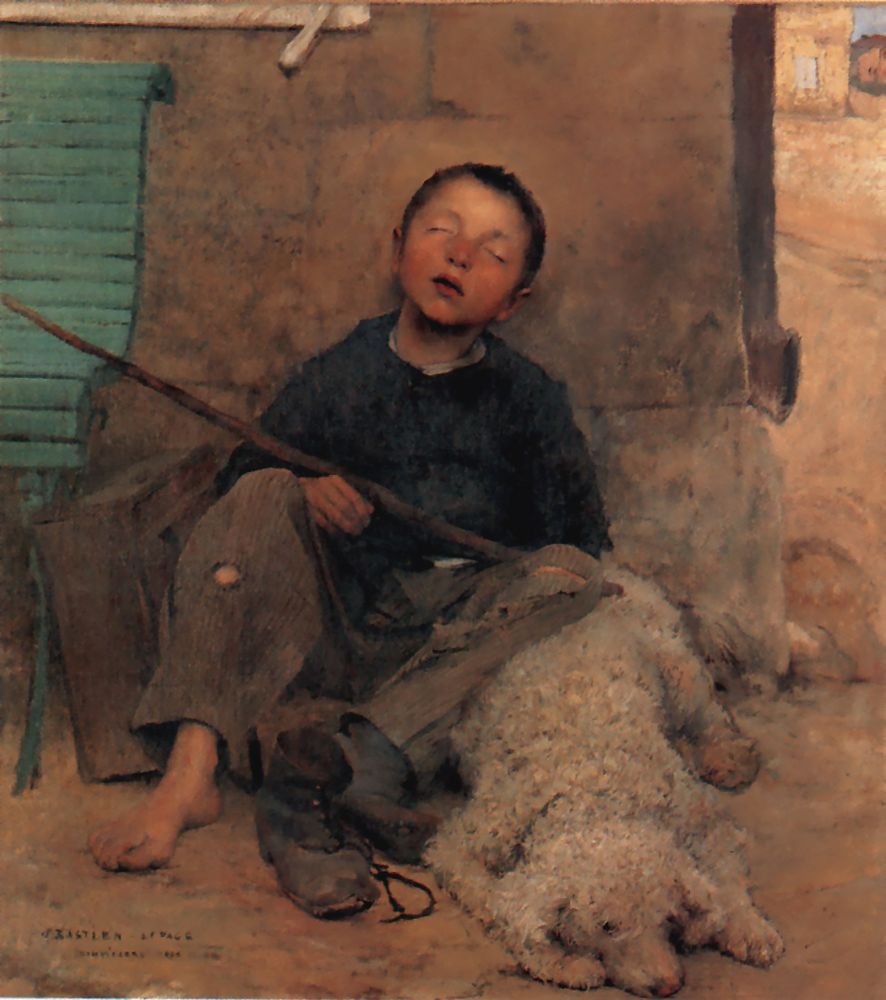
Jules Bastien Lepage, The Blind Beggar
These depictions of poor children were also used by social realists like Augustus Edwin Mulready. They match perfectly with the stories of Charles Dickens. In the painting below the sharp contrast is illustrated between the well fed and clothed children of the upper class versus the homeless street children in which the meaning of true christianity is challenged.
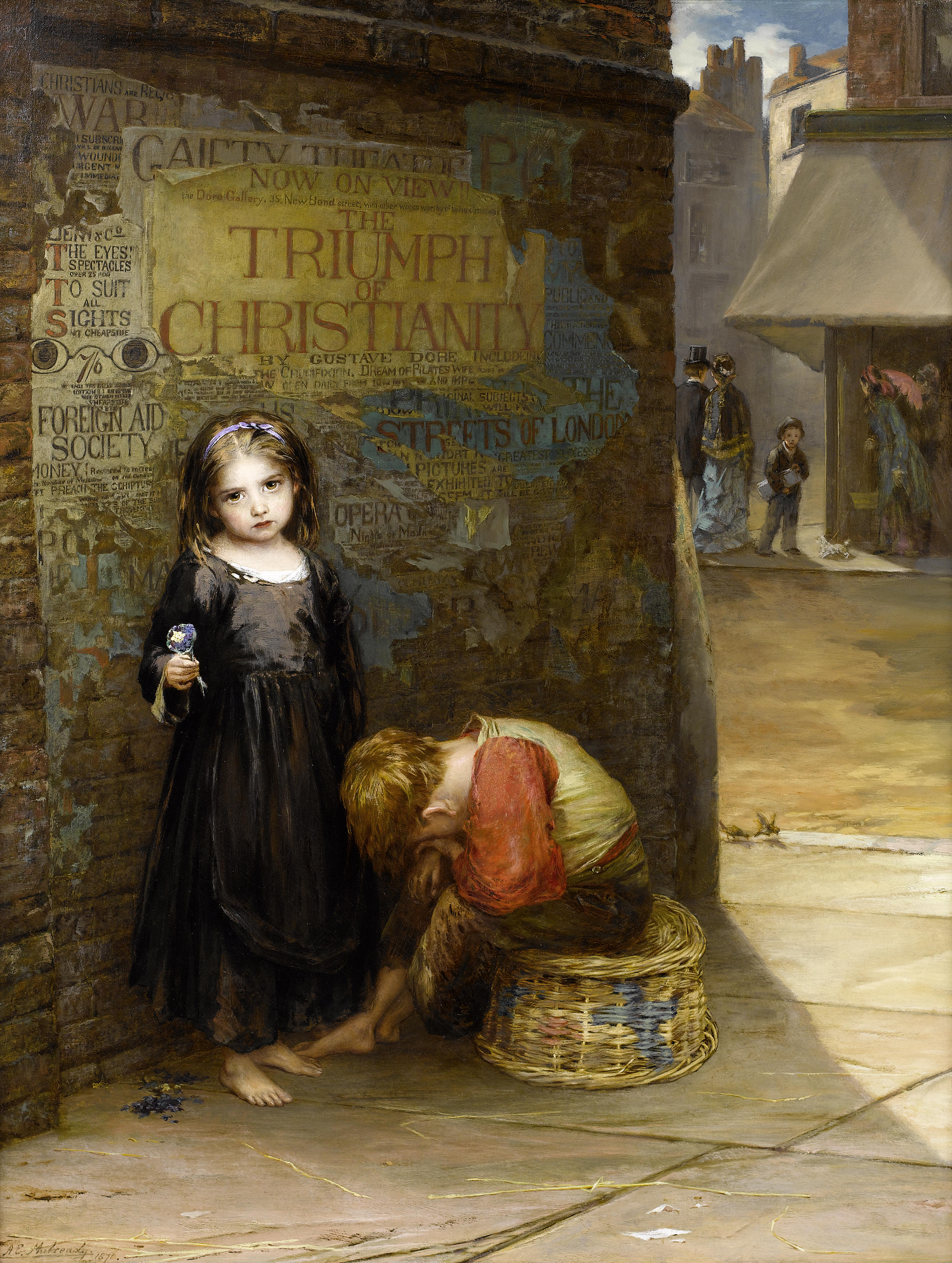
Augustus Edwin Mulready, Uncared for, 1871
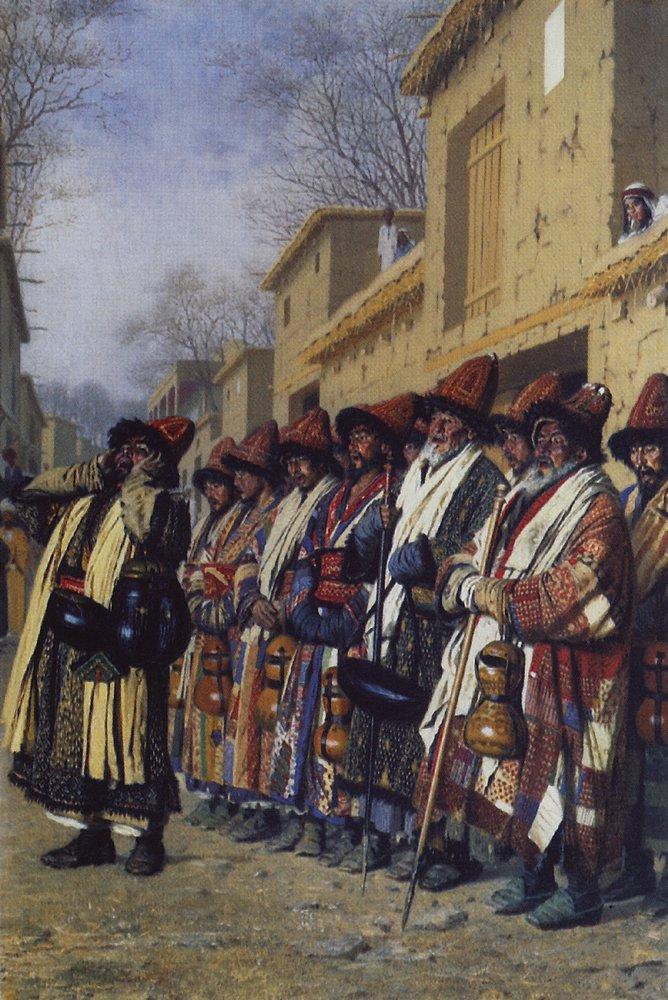
Vasily Vereschagin, chorus of dervishes begging in tashkent,1870
Poverty and begging is of all times and of all places. Different cultures result in different expressions of begging. In Central Asia beggars formed collectives who originally started as religious orders were poverty was a way of living. They chanted hymns and one of those melodies survived to the present day because of Beethoven who found an old transcription and transformed it in his Chorus of Dervishes opus 113 which includes his Turkish March (not to be confused with the Turkish March of Mozart).
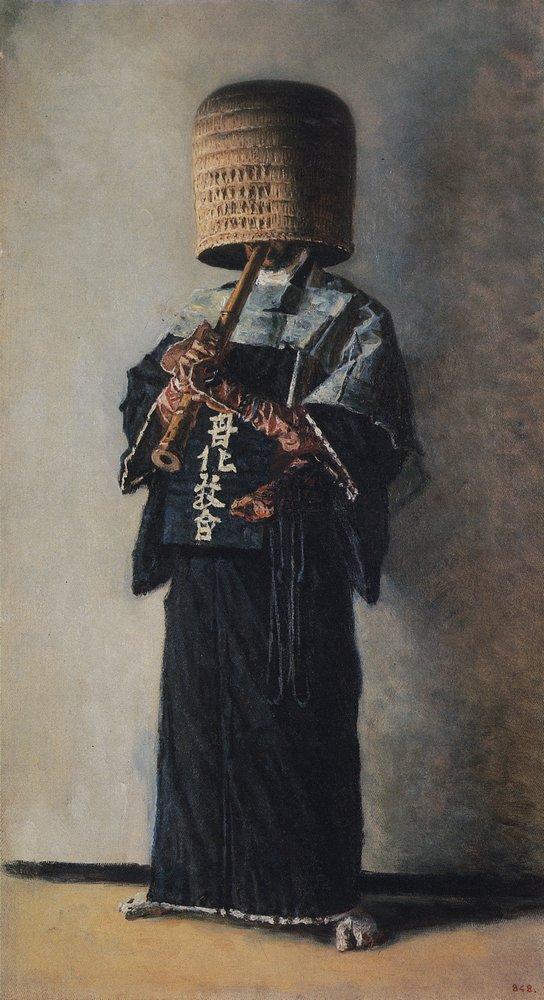
Vasiliy Vereschagin, Japanese beggar, 1904
In Japan, Vereschagin met a special mendicant order of the Fuke school of Zen Buddishm : the Komuso monks. They had a typical appearance with their heads completely covered by straw hats and playing a bamboo flute to collect alms. These were mostly old samurai warriors who’s master had died and who chose not to perform suicide (which was the code of honour). Masterless samurai were called ronin and often chose to become komuso monks which granted them the possibility of free travel. It is said that their flutes were slighly bigger than flutes were supposed to be, so that they could double as a weapon.
Begging however was not the first choice for poor people, throughout history people have done hard labour to earn just a few coins to feed their children. One of this jobs was pulling ships by a rope, the so called barge hauling.
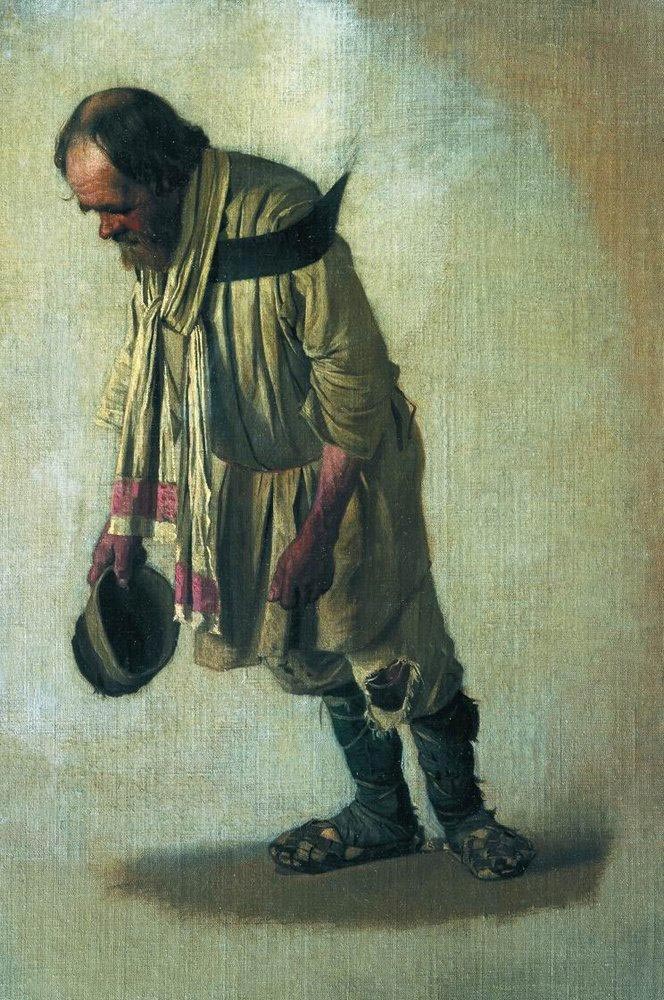
Vasily Vereshchagin, study for barge hauler
The most famous painting about barge hauling is from Ilya Repin.
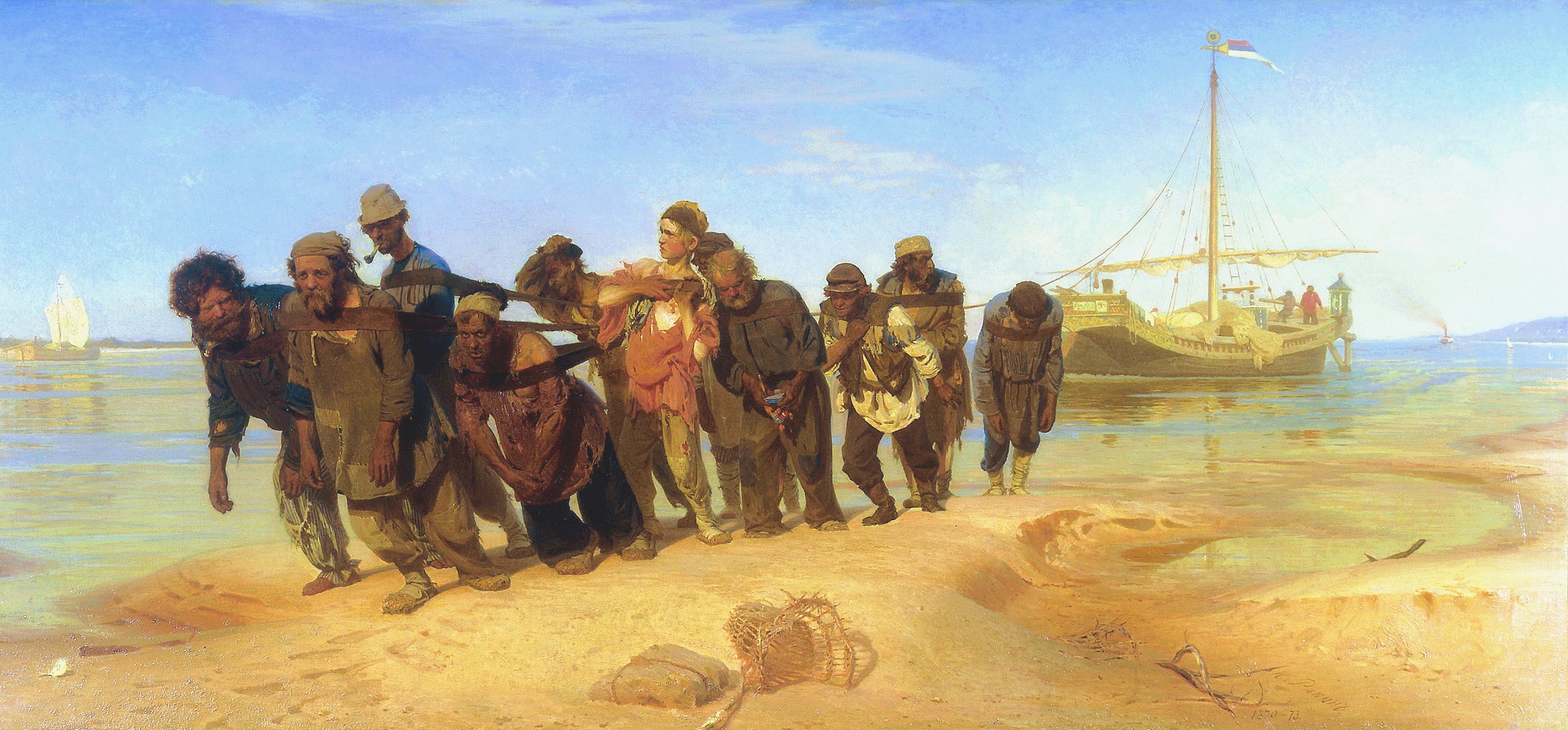
Ilya Repin, barge haulers on the wolga, 1872
The sharp distinction between the rich merchandisers and the producing working class was painfully illustrated by the German Hubner in his scene of the Silesean weavers in which the manufacturer is rejecting a piece of linen cloth, thereby ruining the poor woman who made this piece and therefore faints. The whole situation ended in a revolt which was the first major strike in Germany and the beginning of labour unions.
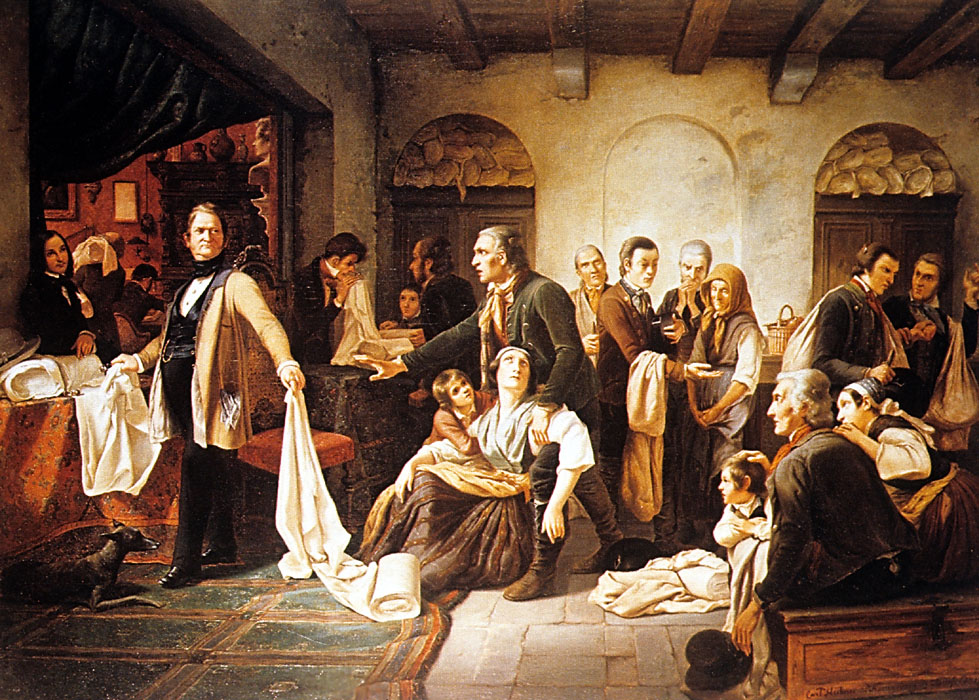
Carl Wilhelm Hubner, The Silesean weavers, 1846
We will end this guided tour by a meeting of two poor cleaning servants, a chimney sweep and a maid. Although both performing cleaning duties, the two should better not meet indoors, a theme that was explored by the Dutch Haaxman and the Russian Zhuravlev.
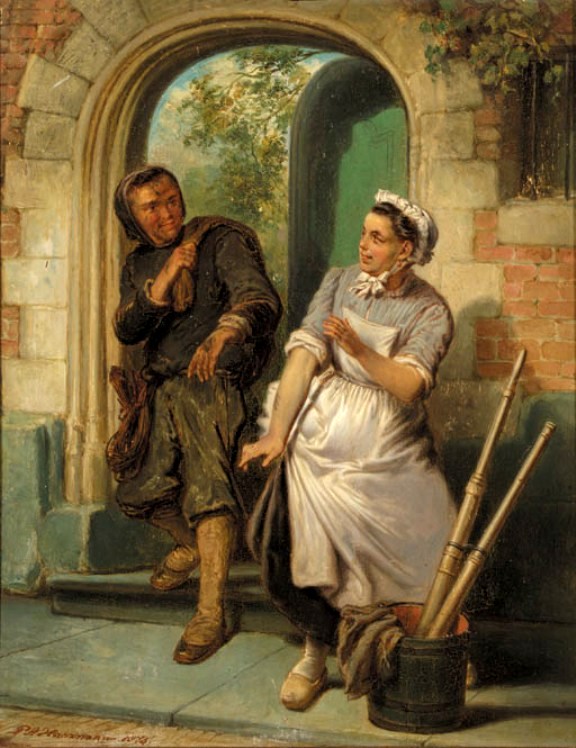
Pieter Alardus Haaxman, Chimney sweeper and the maid,1876
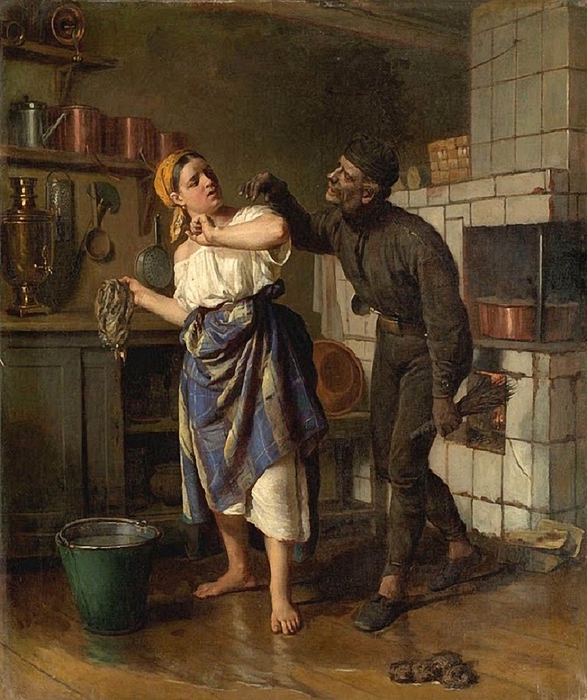
Firs Zhuravlev, Chimney sweep